

Getting a pTau-217 blood test for Alzheimer’s Risk
In my last blog post I shared that I decided — as part of my “What to Do in Retirement” theme — to get a blood test that measures pTau-217, one of the earliest and most accurate biomarkers for Alzheimer’s disease. They now know that Alzheimer’s pathology can begin 15–20 years before symptoms, so early detection is becoming as important as cholesterol testing.
Last week, I got the results.
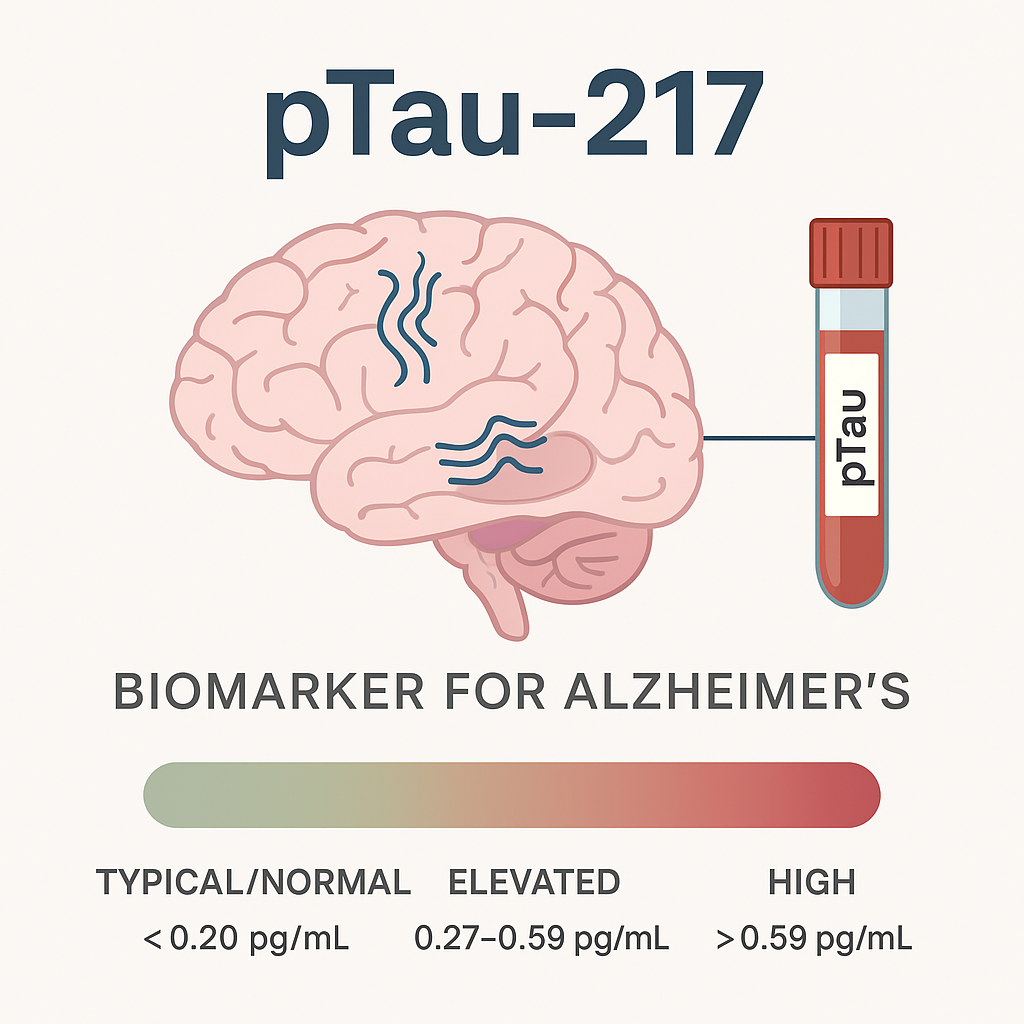
➡ My pTau-217 level is 0.13 pg/mL.
➡ Which means… absolutely nothing alarming. In fact, it’s great news!
Research labs all over the world (BioFINDER, Mayo Clinic, Alzheimer’s Research & Therapy, JAMA Neurology studies) use cutoffs ranging from 0.27 to 0.59 pg/mL to indicate early Alzheimer’s activity.
My number? 0.13.
“Low Risk” – This was a huge relief, but since these tests are new, I still wasn’t sure what exactly it meant. Did it mean I was in the clear for life?
So, thanks to Google and ChatGPT, I did more research and found out:
- I’m not in the 20-year preclinical Alzheimer’s window.
- I don’t have measurable amyloid or tau buildup.
- My risk for developing symptoms in the next 10–15 years is considerably lower than average, even with family history.
How often should we test for pTau-217?
Experts say pTau-217 levels rise extremely slowly, so every 2–3 years is a reasonable interval — unless I join a clinical study.
Now that the results are in, it’s easy for me to say I’m glad I got tested. I’d been obsessively worried and now I can breathe easier. However, those who are high-risk are eligible to participate in trials. The best time to be able to influence the outcome is before symptoms begin to show during the “20-year preclinical Alzheimer’s window.”
If you’re curious about your own risk, I did my free screening through CareAccess, and they even gave me a $45 gift card.
Here’s my referral link:
http://friends.careaccess.com/783Mjz
Whether or not you get tested or are low-risk or high-risk, I think we could all benefit from having a brain-healthy lifestyle. This year, my blogging theme was “retirement.” Next year, it’s going to be about Healthy Aging, with an emphasis on Brain Health!
I’m excited to share all that I’m learning about Alzheimer’s and the brain.


