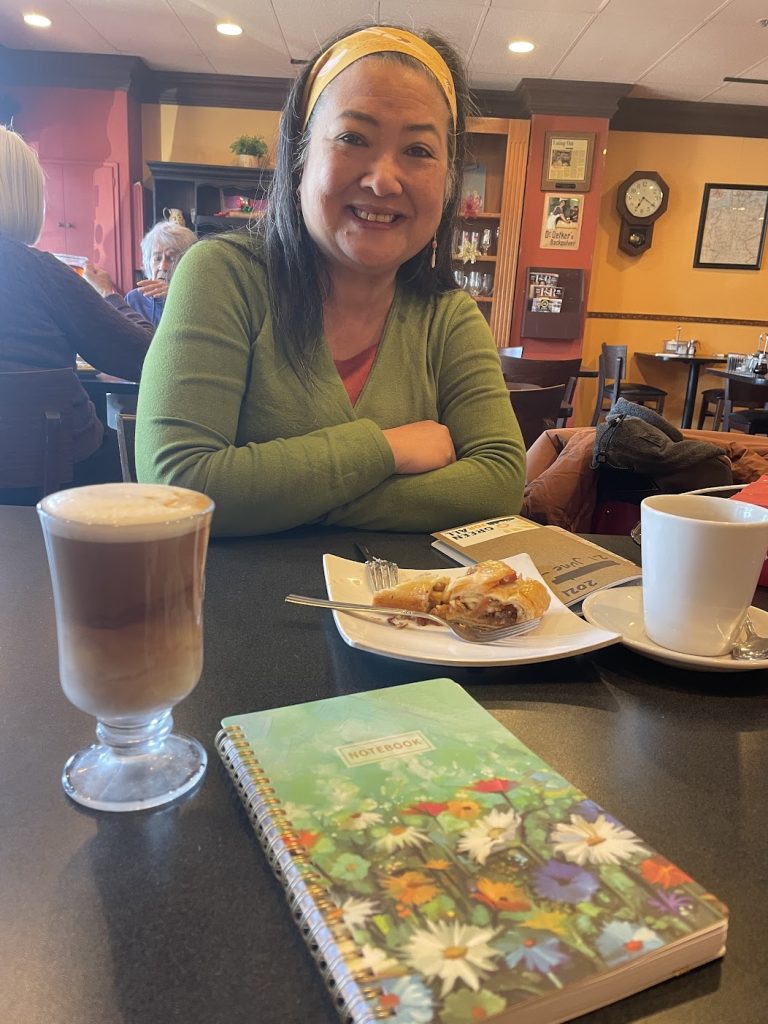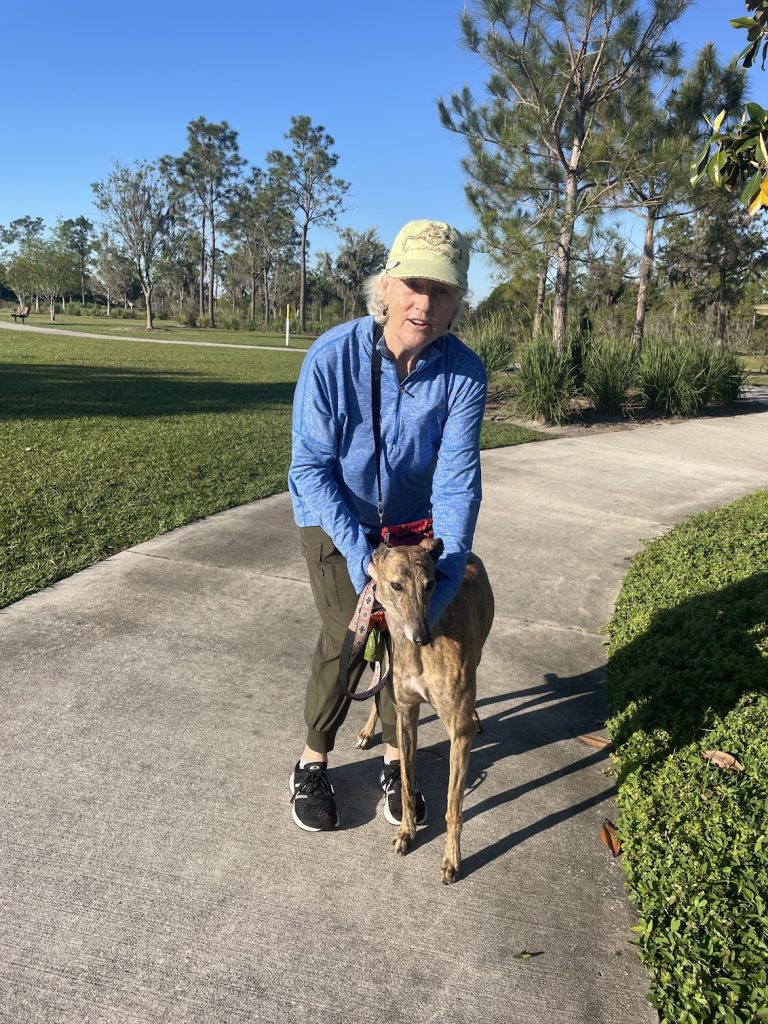
My adventures in Mexico continue. This weekend’s stop: Guadalajara hosted by my generous ConversationExchange partner, Ramón.
From the moment I arrived in Guadalajara, it was clear this trip would be different. Usually, it takes me at least a half-day to figure out where I’m going and how I’m going to get there. Ramón not only greeted me at the airport—he and his family spent the entire weekend showing me all the sights, sounds, and tastes of Guadalajara. I was a pampered visitor who didn’t have to lift a finger!
The Food of Guadalajara
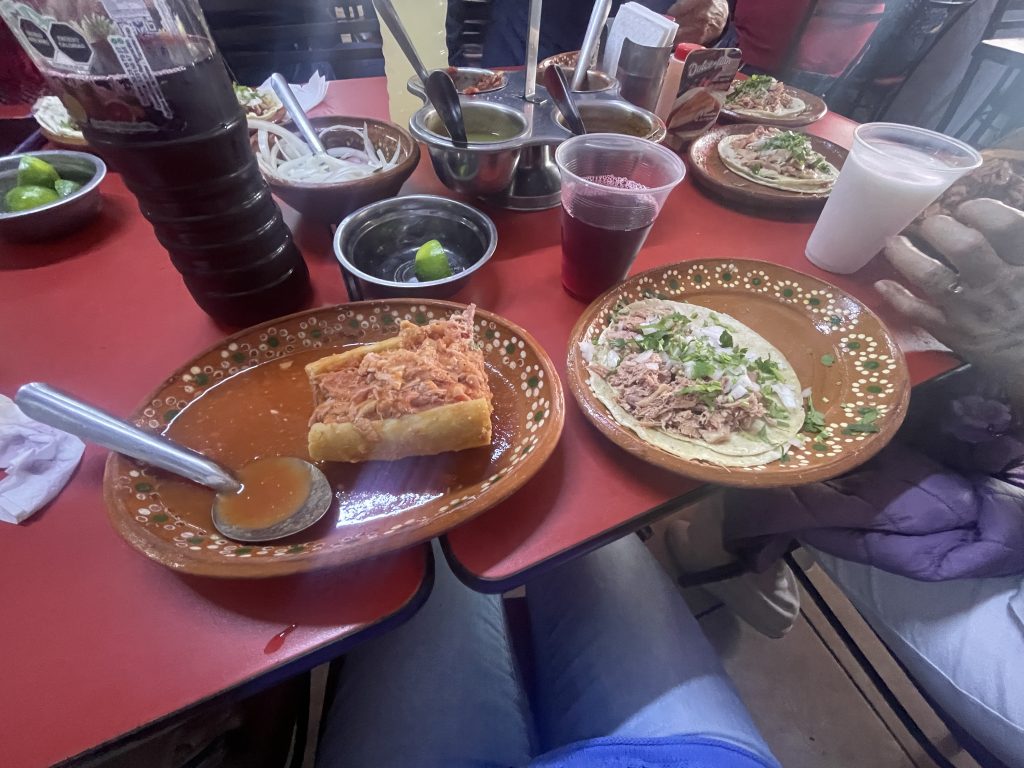
Ramón’s wife, Sylvia, and their daughter met us for lunch at Tortas Ahogadas. Over plates of Guadalajara’s iconic, gloriously messy sandwiches, it soon became clear that Ramón and his family were going to give me an immersive experience in every way, including gastronomic delights.
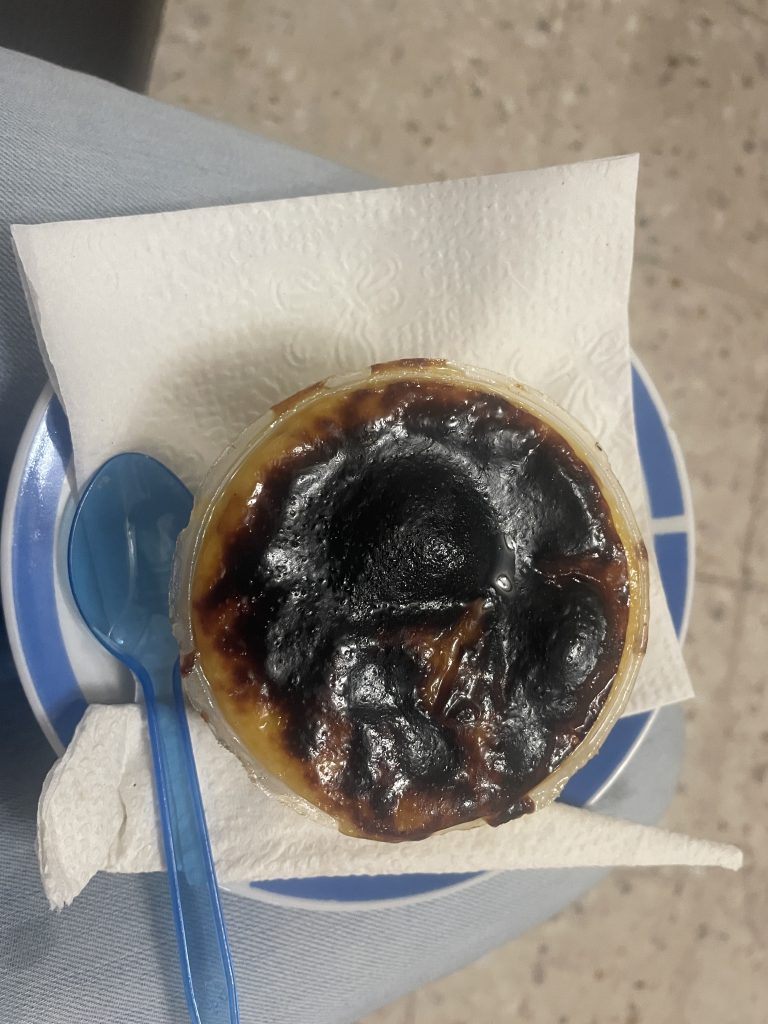
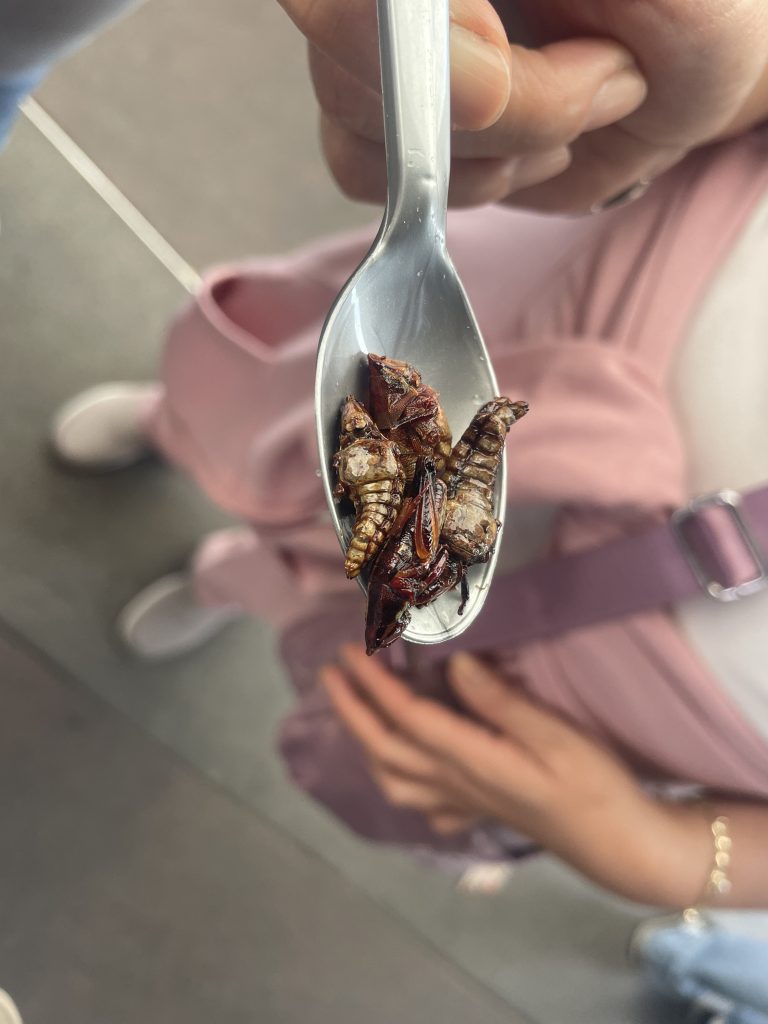
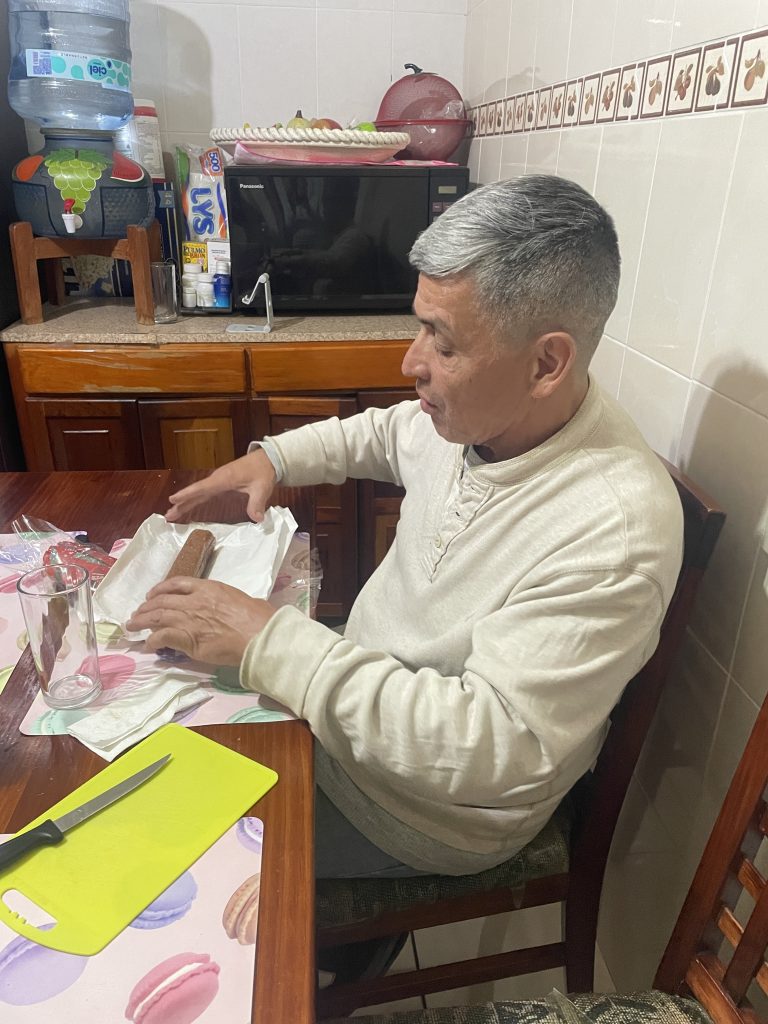
Tortas AhogadasJericalla – A traditional custard dessert from Jalisco A snack of crickets! (I did NOT try this one.)Dulces! A sweet jam and nut-filled roll sliced into bite-sized delicacies
The Sights of Guadalajara
The family took me on several outings: walking city squares, visiting markets, exploring art galleries, and sampling foods. Even when we were simply walking, Ramón was teaching—about the city, its history, and, of course, helping me with Spanish.
Ramón is a natural teacher – that was his profession. Even though he’s newly retired, he continues to teach and is obviously a life-long learner himself.
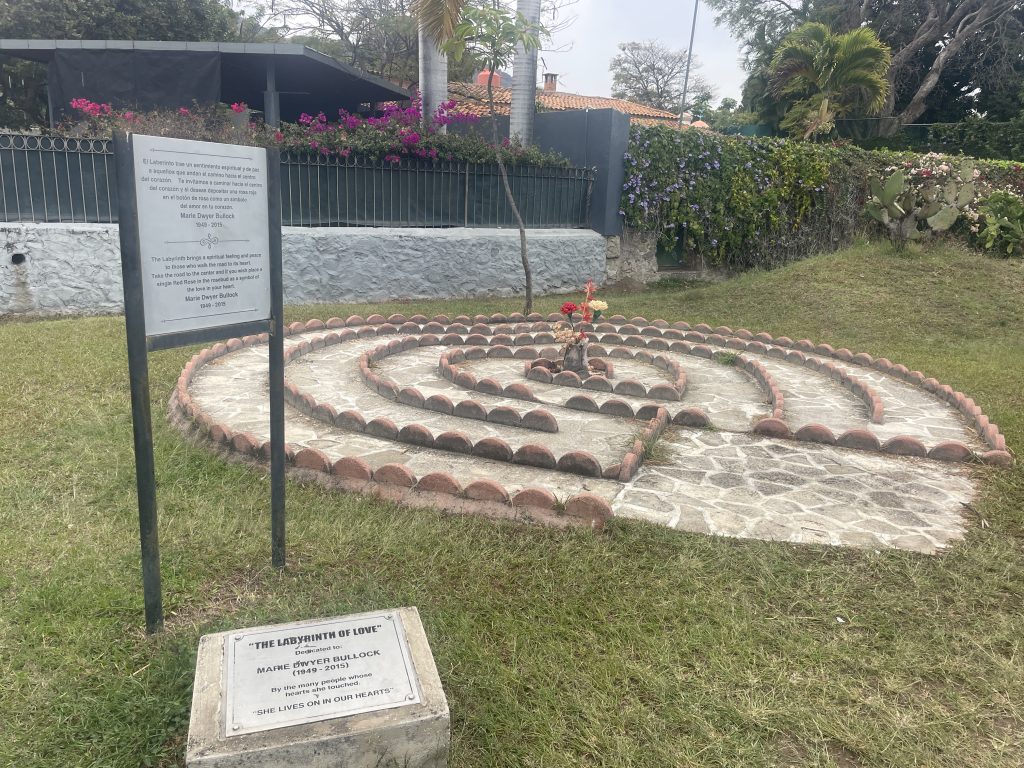
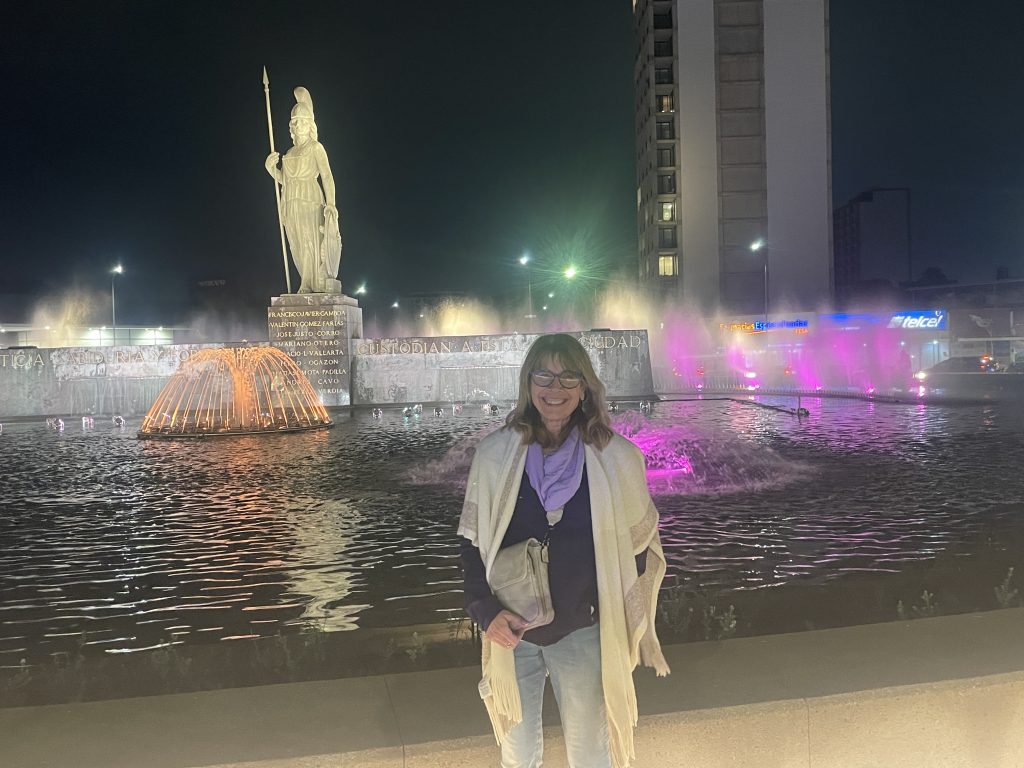
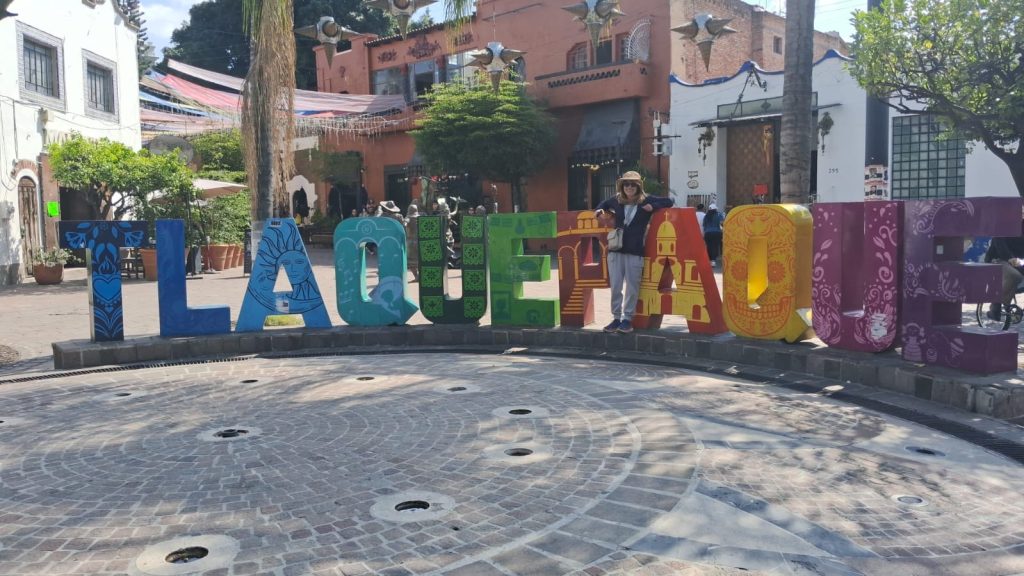
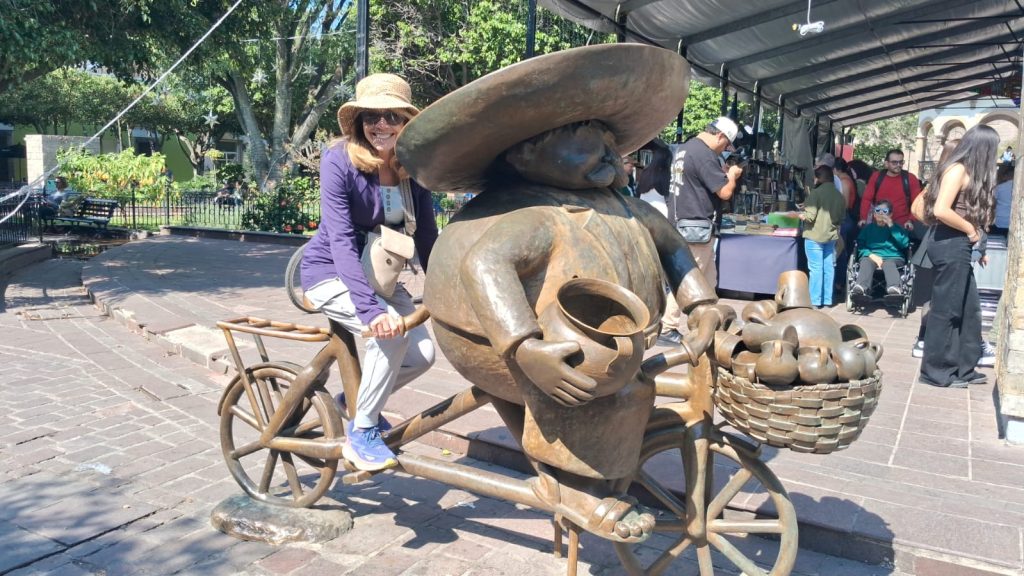
We saw so many sights that it’s hard to pick out which pictures to share, but here are a few.
Feeling Like Family
On Monday morning, before Sylvia left for work, we shared a full breakfast at their lovely home. I was truly amazed at their thoughtfulness. Although we had only met through ConversationExchange Zoom calls before this visit, Sylvia and Ramón treated me like family. They paid attention to the small things that make someone feel truly cared for—tea made from homemade herbs with lemon from their garden, slippers waiting for me, postcards made with sand art, sending me off with a bag full of sweets. These weren’t gestures of obligation; they were gifts of kindness.
Their hospitality was so sincere and generous that I left inspired—and a little humbled. I kept wishing I could reciprocate in some meaningful way.
Whenever I offered to help pay, Ramón and Sylvia insisted, laughing it off with a cheerful, “Mañana.”
When Ramón drove me to Ajijic later that day, I tried to tell him, in my imperfect Spanish, how valuable the weekend had been to me. He had been my driver, teacher, guide, host, and photographer. These are expensive services for travelers. Not only that, they paid for all my meals, all the gas, parking expenses – everything!
But what was truly priceless was this family’s genuine kindness. That is an experience that I’ll always treasure.
Guadalajara gave me beautiful places, incredible food, and unforgettable walks—but Ramón and Sylvia gave me something rarer: trust, warmth, and a reminder of how powerful everyday generosity can be.
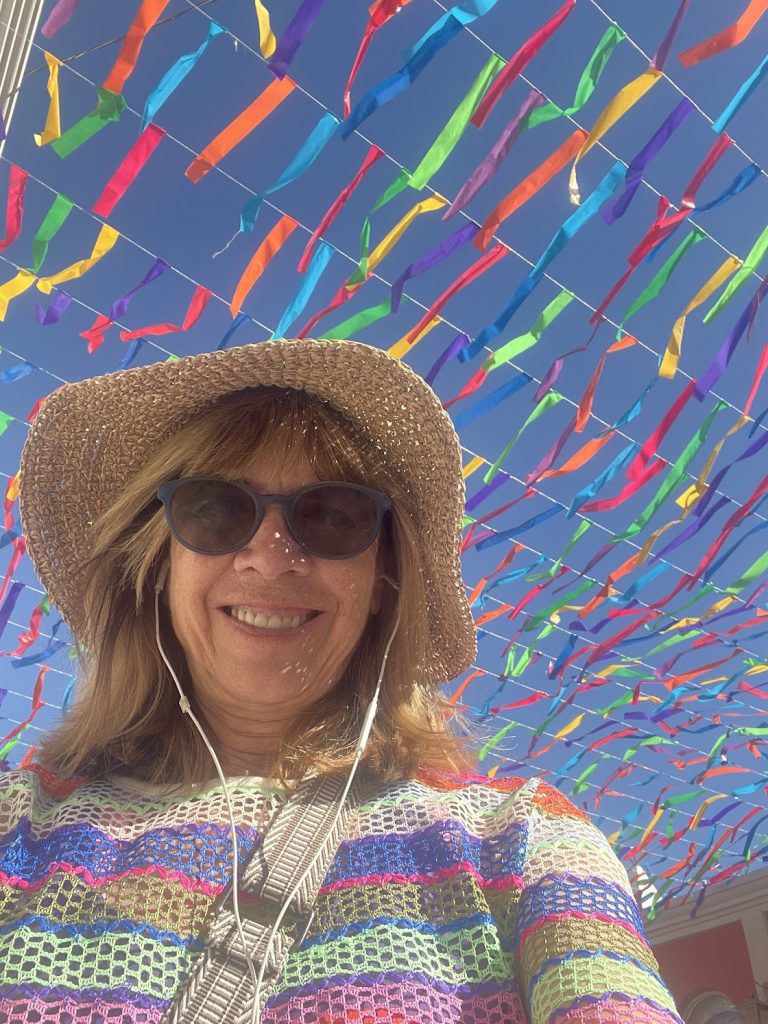
Final day in San Jose del Cabo before heading to Cabo San Lucas
I’m always so excited in the New Year! New goals! I’m going to read more, write more, exercise more, eat better, never get mad (😂), learn Spanish fluently, have an adventure every week, dance every day, give more, strengthen my faith, celebrate each day, and the list goes on and on.
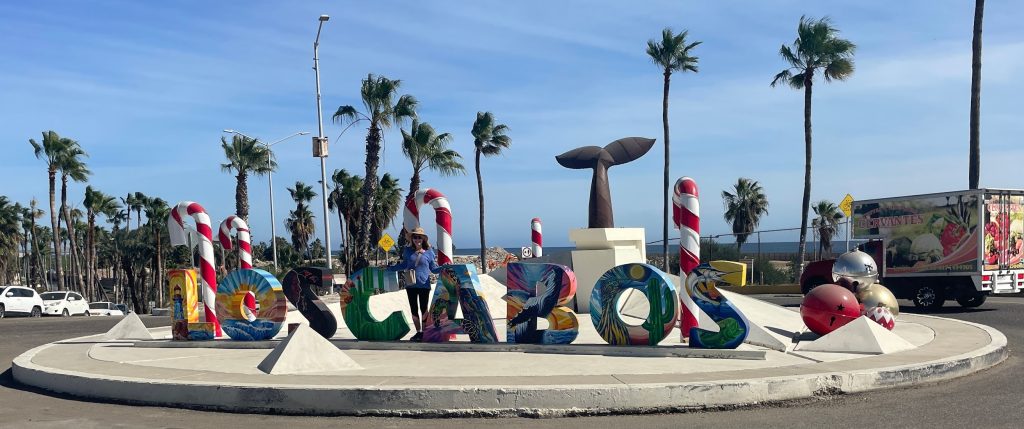
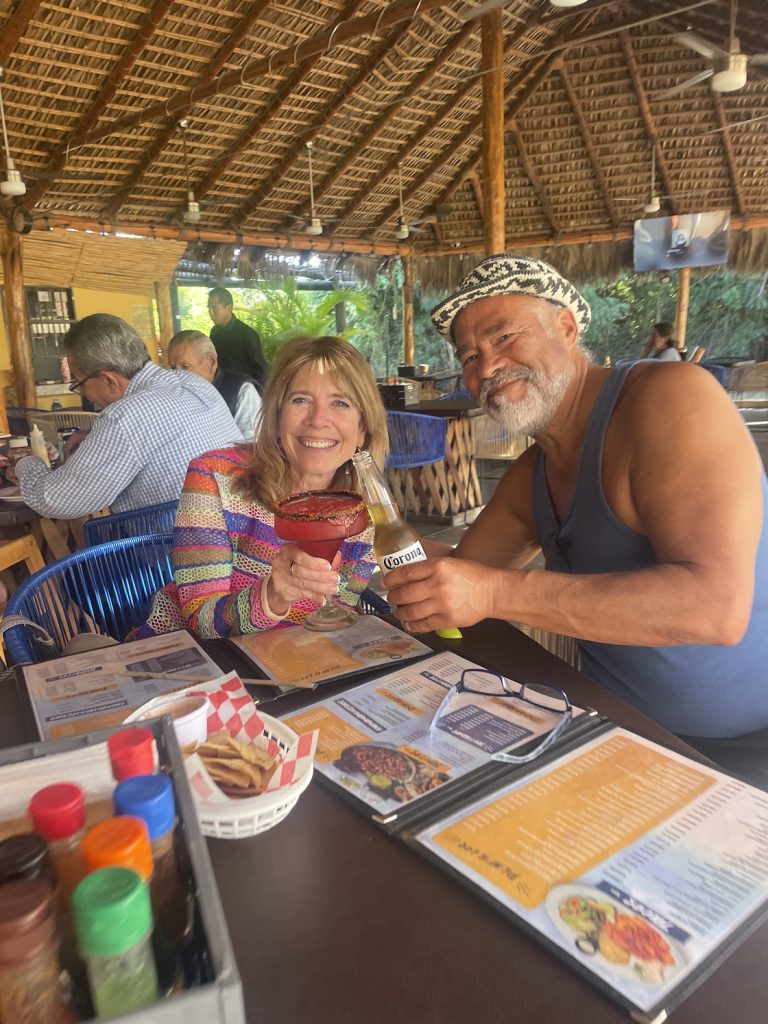
This year, my first big adventure began in San Jose del Cabo, Mexico. I spent 10 days here on my own before meeting up with my BFF, Lisa, along with her partner, Steve for a stay at Pueblo Bonito in neighboring Cabo San Lucas.
I’ll spare you the details and progress of my way-too-many goals, but the overarching “goal” for my life is to live and love fully.
Connections in San Jose del Cabo, En Español
Sharing a meal with Amado at his favorite restaurant, Claro Fish Jr. in San Jose del Cabo.
The first 10 days of the year, I was on my own in San Jose del Cabo. Every day, I had a goal to have a conversation with a local in Spanish.
Day 1: Taxi-Driver
Day 2: Waitress
Day 3: Get battery on my phone replaced (I’m still proud of this one!)
Day 4: Discuss Venezuelan President capture with Pharmacist (his topic and beyond my Spanish-speaking abilities!).
I hit the jackpot when I met Amado, a bilingual Mexican-Canadian. I told him that I wanted to practice Spanish and he was a patient listener, teacher and tour guide! He showed me all over San Jose del Cabo and was so generous with his time and his heart. It was my favorite day in San Jose del Cabo. Amado became a fast friend and I hope we’ll stay in touch.
Connections with God and BFF, Lisa
Full of awe at a the morning sunrise and a timely God moment
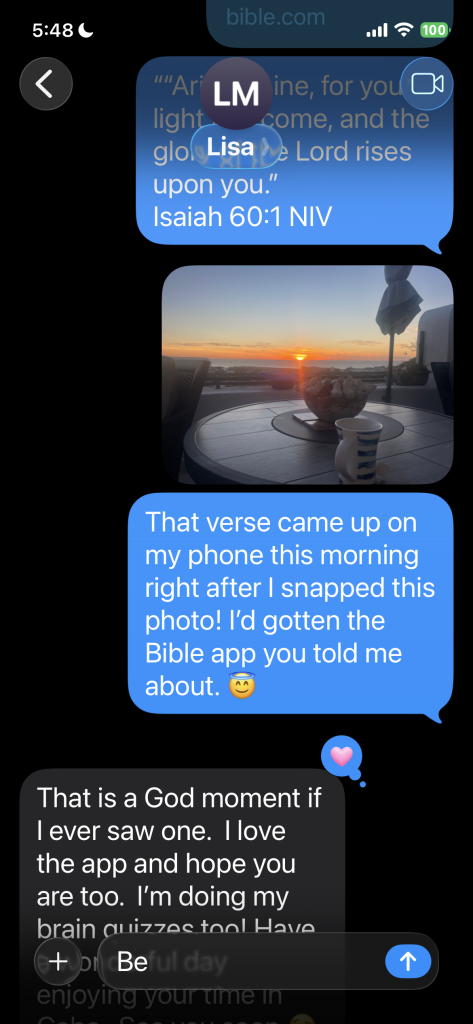
In my quest to further my connection with God, I’d downloaded the Bible app, on the recommendation from my BFF and Minnesota-friend, Lisa.
Every morning that I was in San Jose del Cabo, I was greeted by the most beautiful sunrise from the high-rise balcony at my HomeExchange.
One morning, right as I was viewing the gorgeous sunrise, my phone dinged and up popped the morning verse:
Arise, Shine, For the Light has Come and the Glory of the Lord has Risen Upon You.
Isaiah 60:1
It was as if God was texting me!
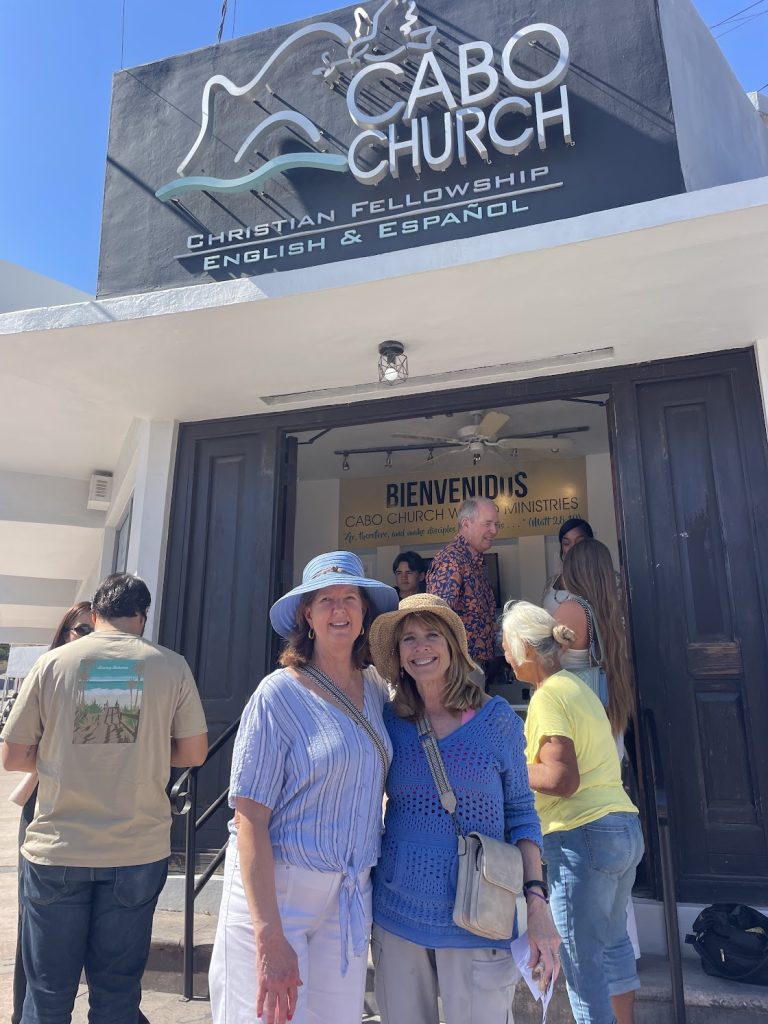
Attending Cabo Church in Cabo San Lucas with Lisa. They recited the same Isaiah 60:1 verse
Maintaining Connections from Afar
Even though I’m loving the warmth, beauty, and freedoms of vacationing in Mexico, I don’t want to neglect or be insensitive to my friends and family that are going through hard times.
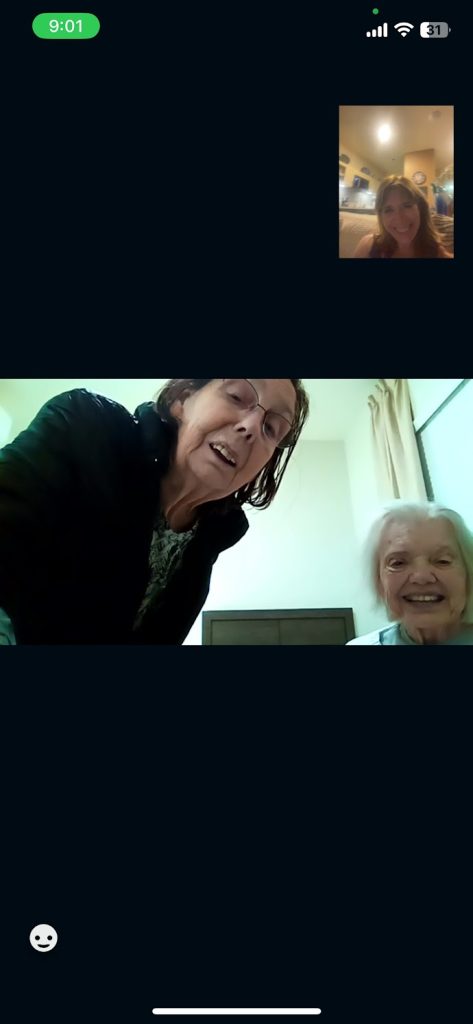
Daily calls with Mom – She’s with her friend, Debbie!
The most valuable calls I’ve been making have been my Drop-in calls to Mom. She still has her good days and bad days. I’ve been happy to see that she now recognizes her new friend, Debbie and that they’ve become very bonded!
I’m also able to stay in touch with other friends and family – Facebook, text messages, and calls help me keep up with what’s happening with my “people” and it’s such a comfort.
What Went Well and What I Want to Do Differently
Overall, this first 2-weeks of 2026 went amazingly well. The beautiful HomeExchange, the ever-present bougainvillea, the colorful streets, finding a new sweet friend, Amado, improving my Spanish, meeting up with Steve and Lisa — all have surpassed expectations.
The one area that I could do better would be to detach more from the news. For the next couple of weeks, I’m choosing to cut back. I’ll stay informed, take a deep breath, pray for those who are suffering, and focus on what I can do—show up, help where I can, and keep noticing moments of joy.
As 2025 comes to a close, I’ve been enjoying looking back at photos and blog posts from the year. Wow! Even though I was uncharacteristically without a “big plan,” I had a lot of “joyful aging adventures.” It’s fun to see what evolves without a lot of “Big Planning Up Front.” (A frequent lesson in the world of an Agile coach.)
One thing that’s become apparent with aging is that life throws us curveballs, so even the best laid plans get interrupted. Flexibility and finding joy, even when life is difficult, have convinced me that every day can be an adventure. That’s what I think of as the “Carpe Diem Mindset.”
With that in mind, I’m sure I must have had at least 363 adventures this year (with 2 more days to go!), but in honor of 2025—and this being my 25th and final post of the year—here are 25 that I’ll share.
Turning 65 and officially entering Medicare And taking advantage of PT without stressing about the out-of-pocket costs!
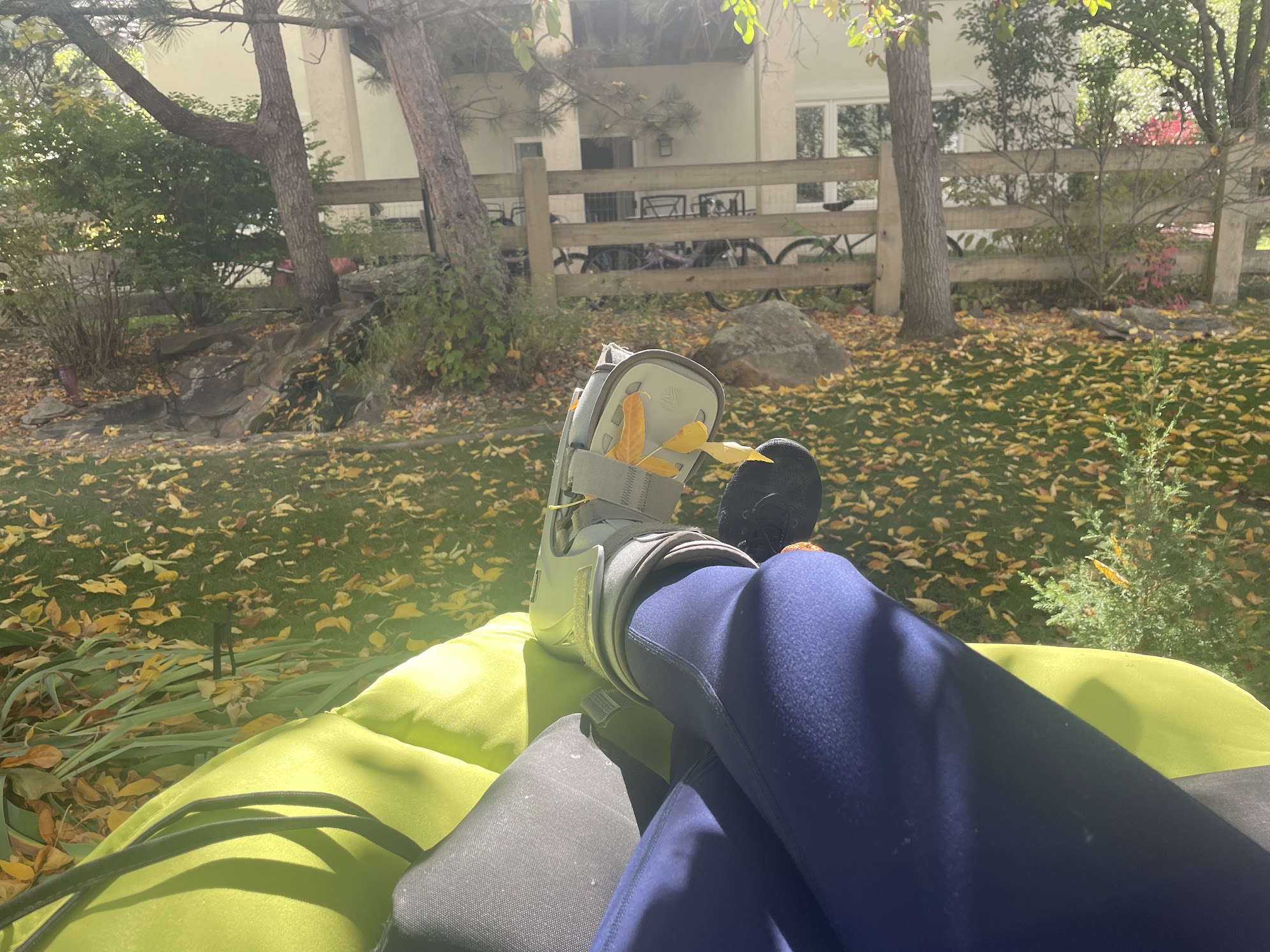
Living through a broken foot—and learning to slow down A quieter “fall” spent noticing my neighborhood, the weather, and enjoying the “break” from 10,000+ steps a day!
Experiencing airport wheelchair service (and loving it) From bus-arrival, bag drop-off, through security to the gate. Easiest airport experience ever.
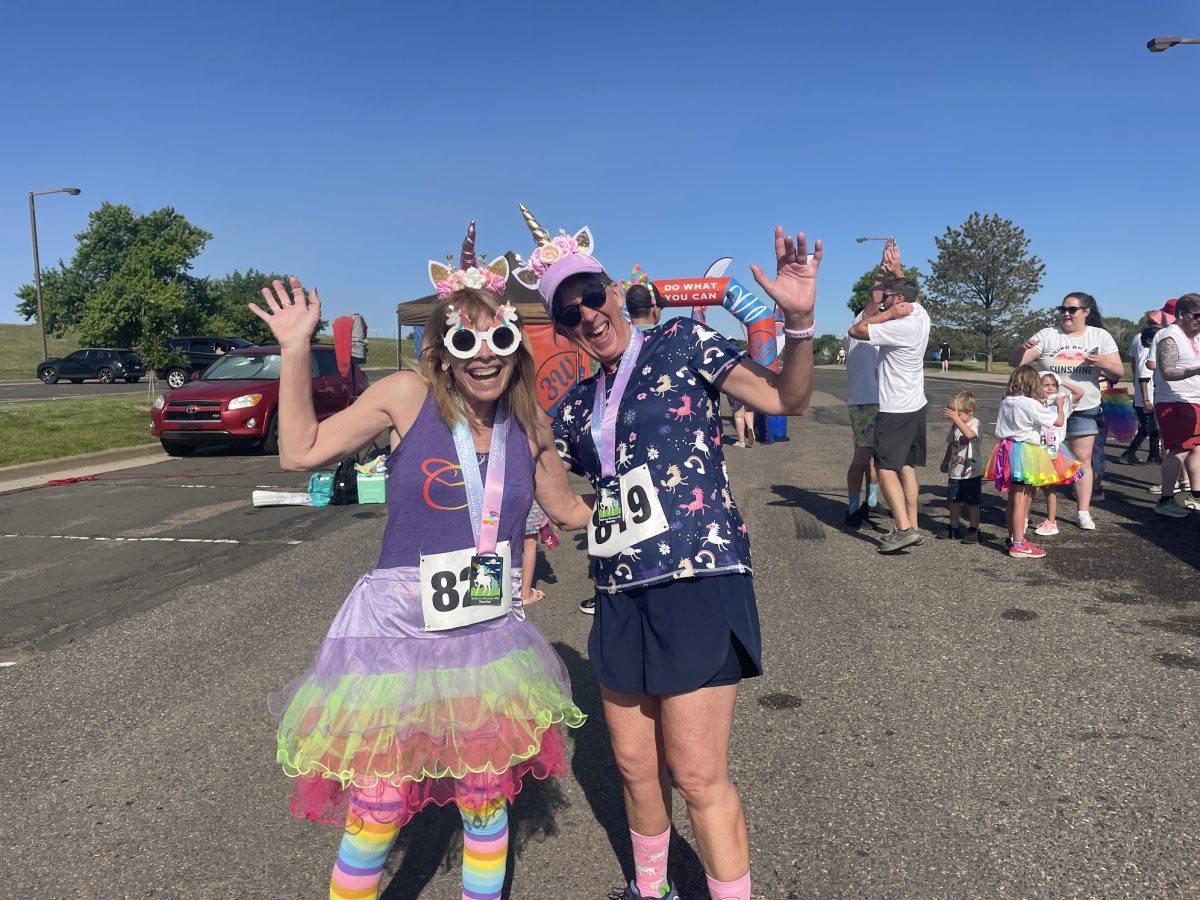
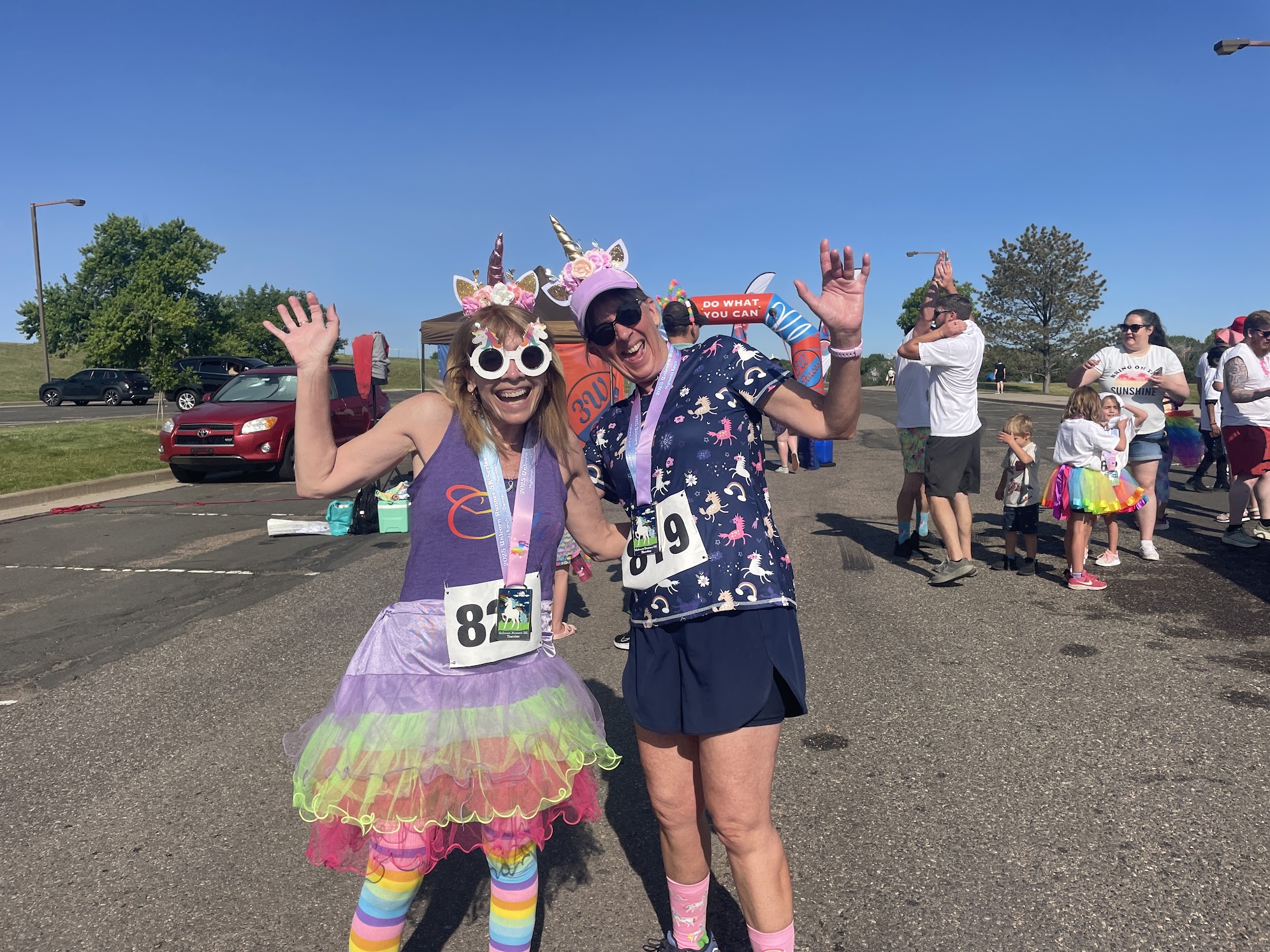
Running and Walking monthly races with Bonnie Winning the Unicorn Race while walking! (There are so few competitors in the 65+ age range.)
Friendship & Community
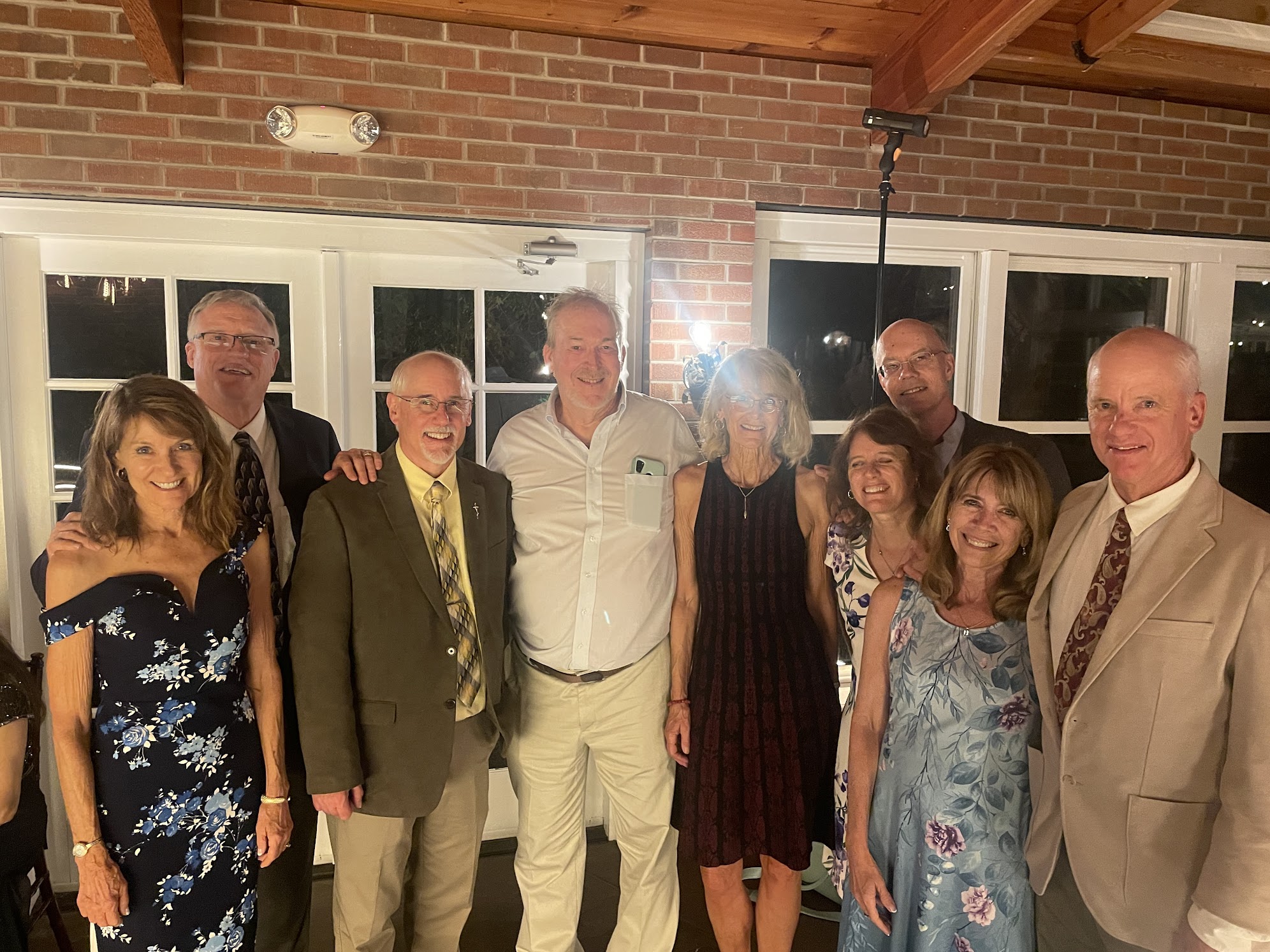
Celebrating a wedding with my good friend, Jackster And being treated like one of the family!
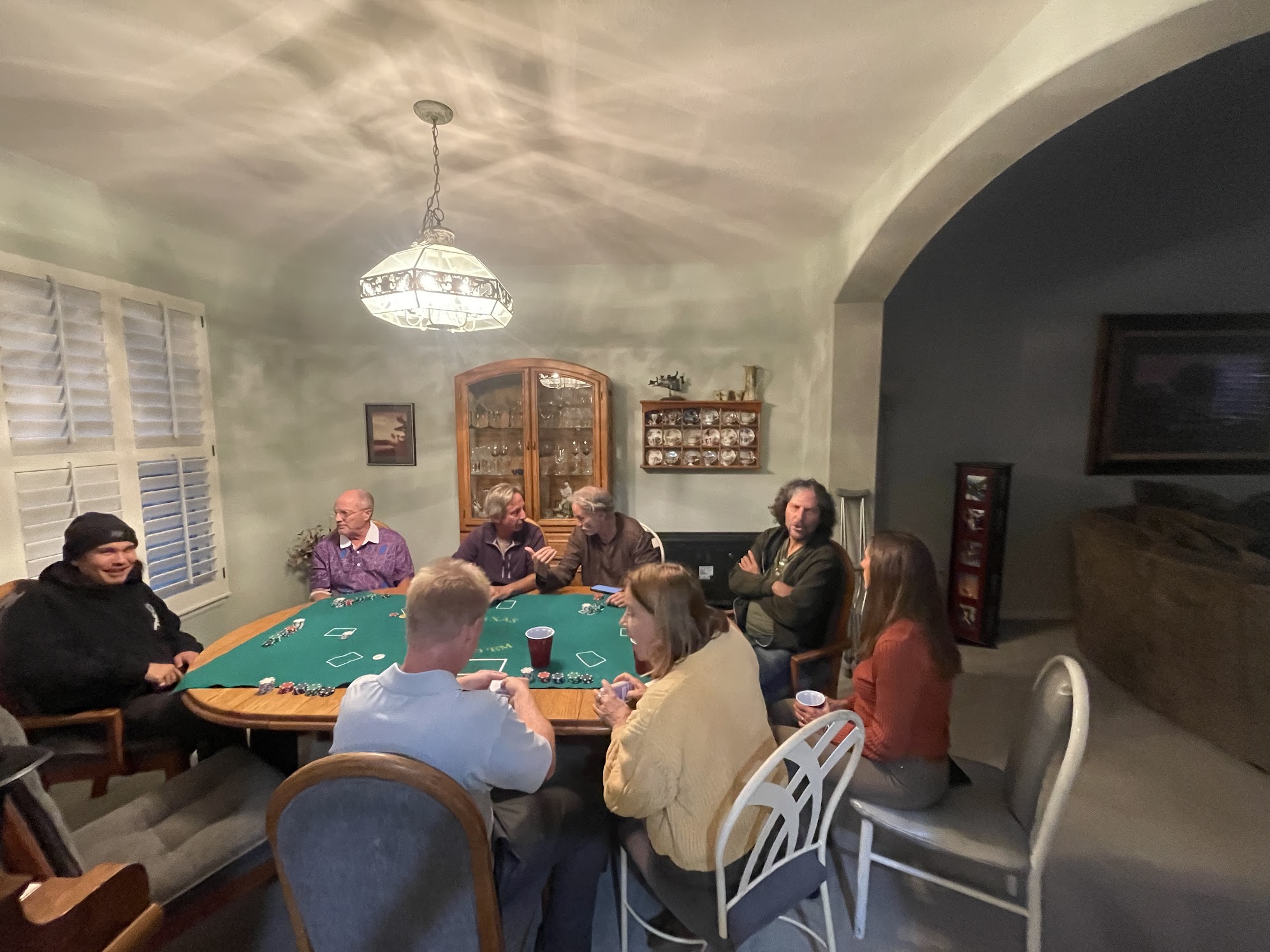
Getting better at Poker! Regular Friday “Seniors” gathering at the Superior Community Center along with hosting an annual game while “Bali Chris” was in town.
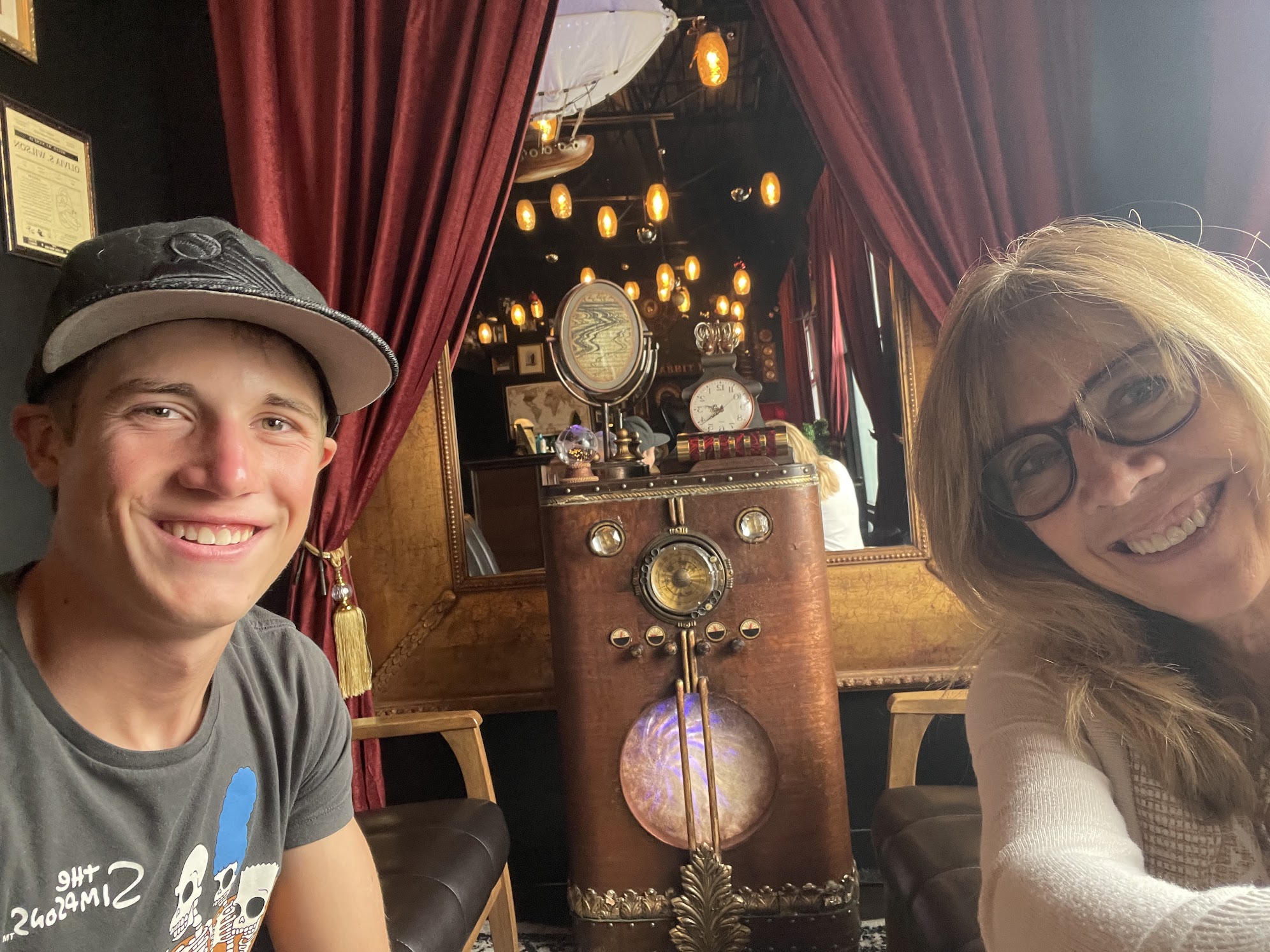
The Light Club with Cathy—and reconnecting with Sonja and her art Creativity, friendship, and connection.
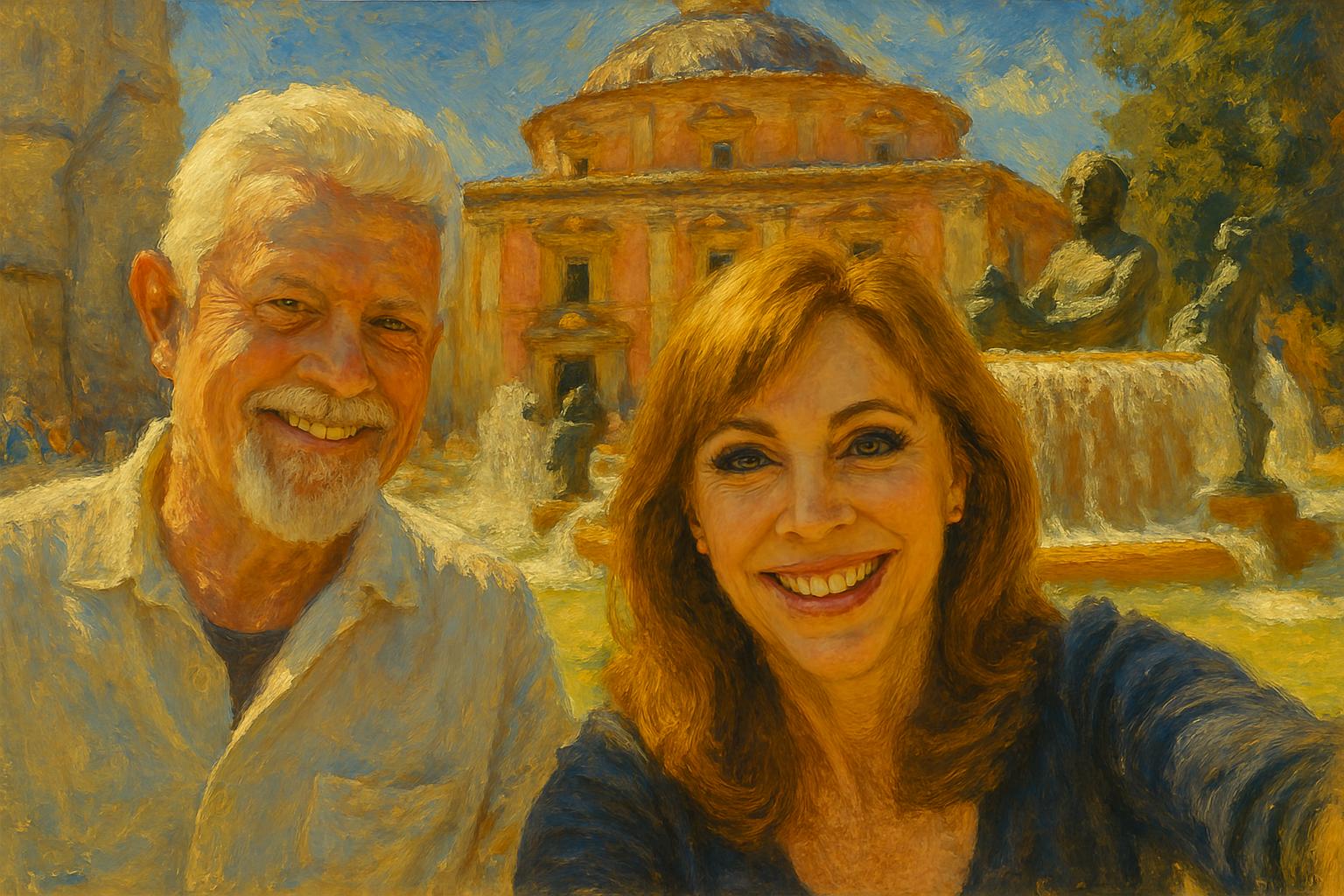
Valencia with my friend David And playing with AI!
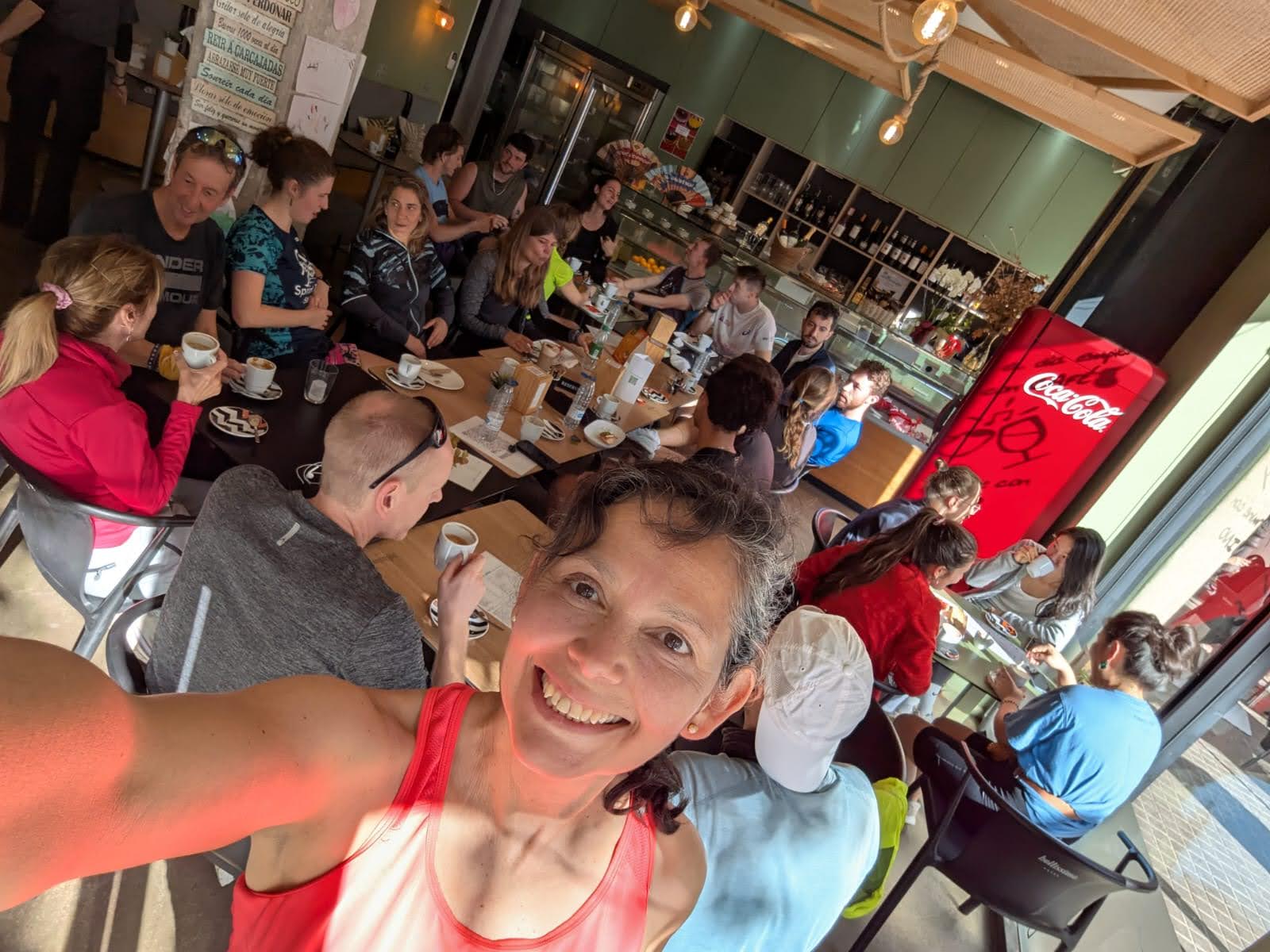
Meeting Ged and Theresa—and running the Turia 5K New connections from around the world!
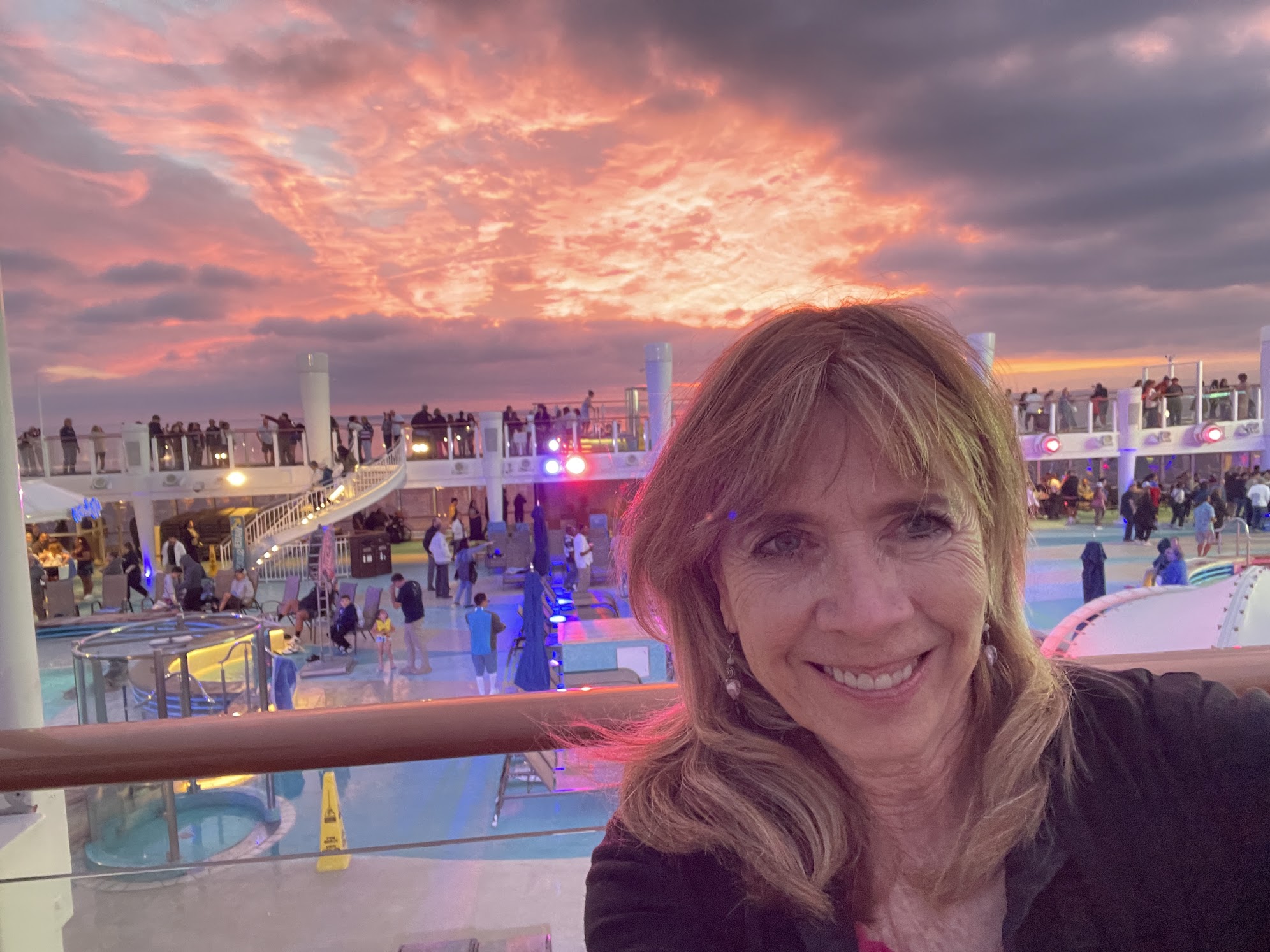
Cruising along the Mexican Riviera Sun and SEA-zing the day!
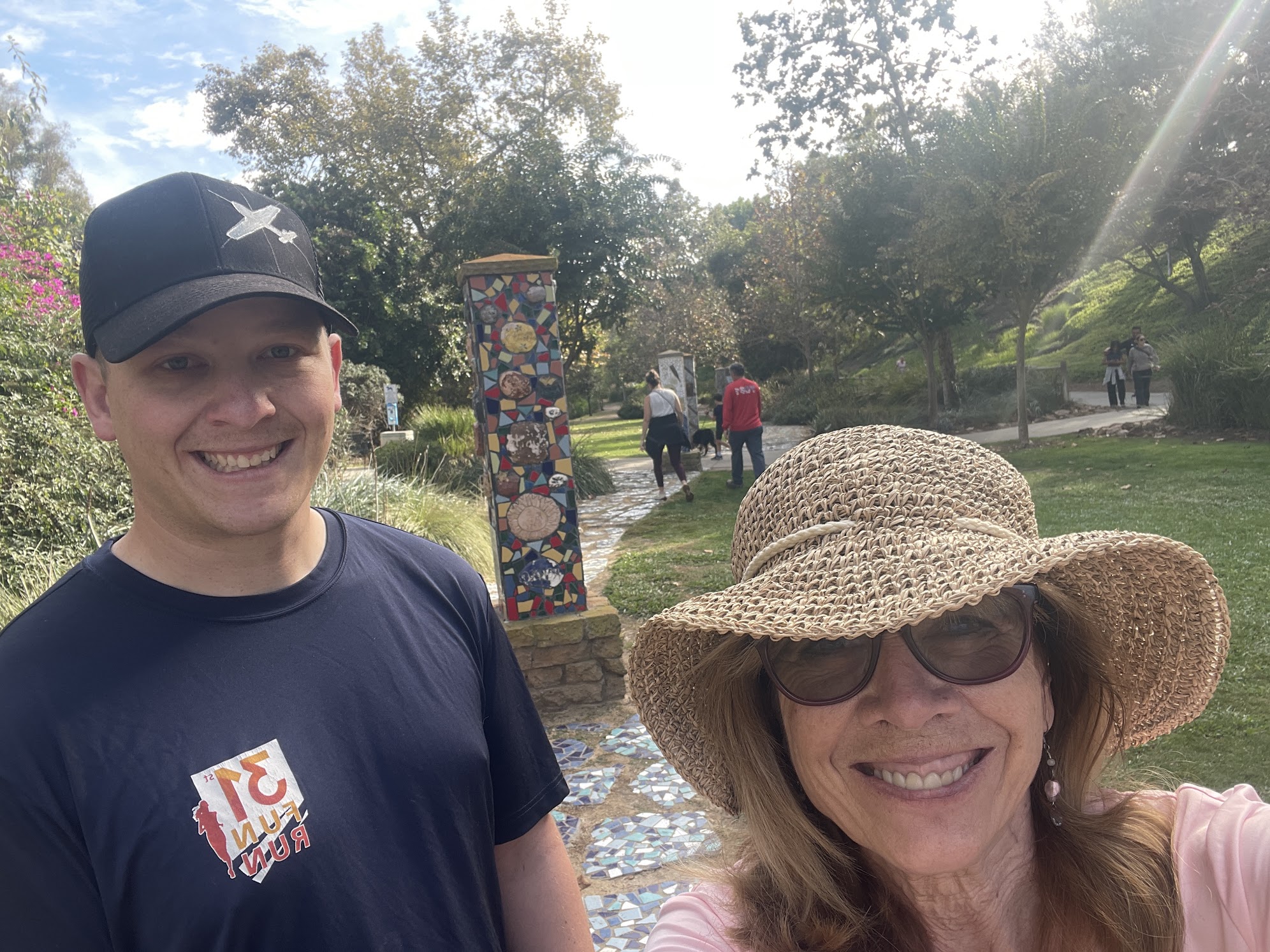
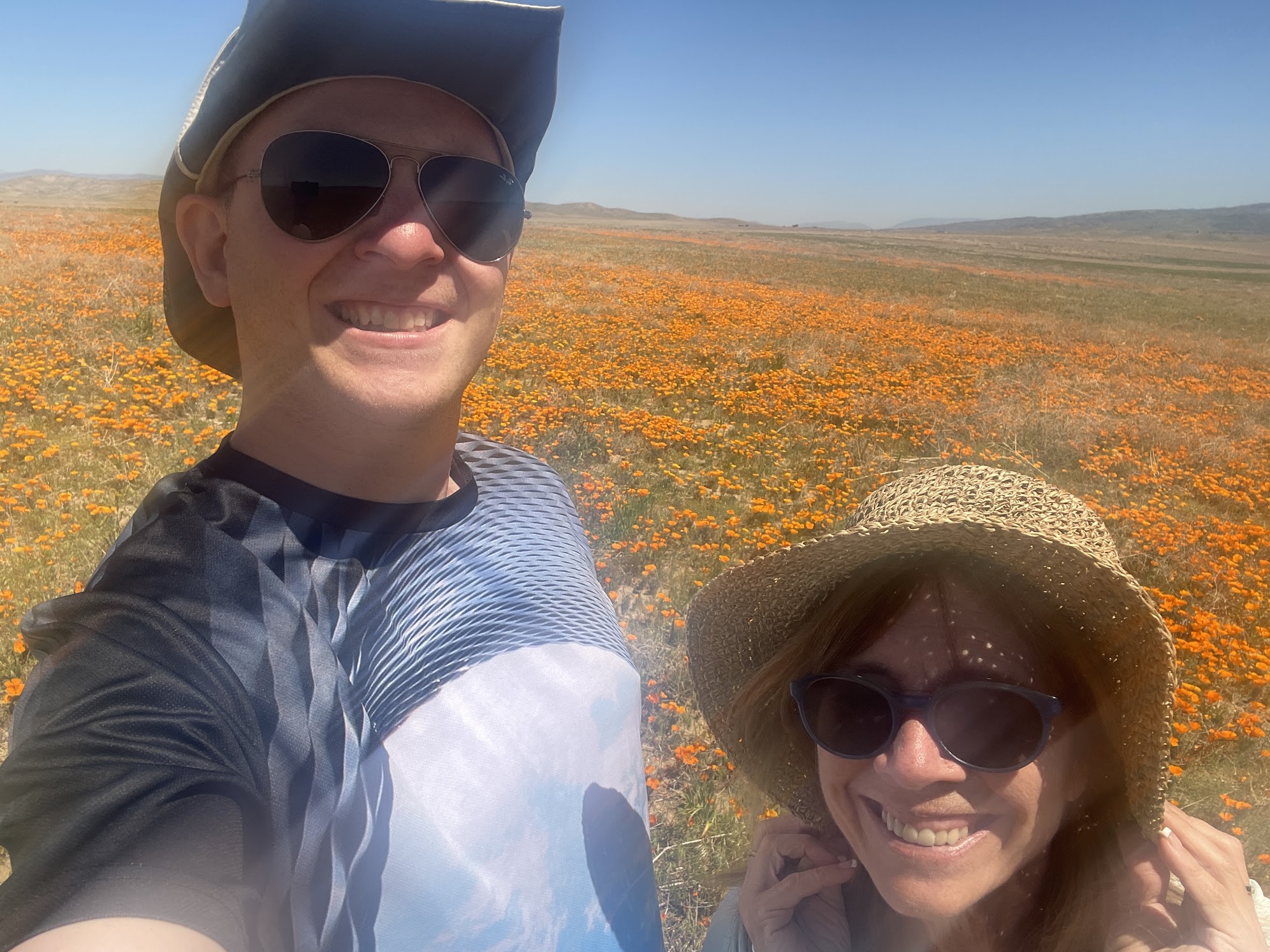
The Lancaster Poppy Festival, Oso Trail, and many other adventures with Scotty Got to spend lots of time with him while he was stationed at Edwards AFB in CA.
Learning, Growth & Expression
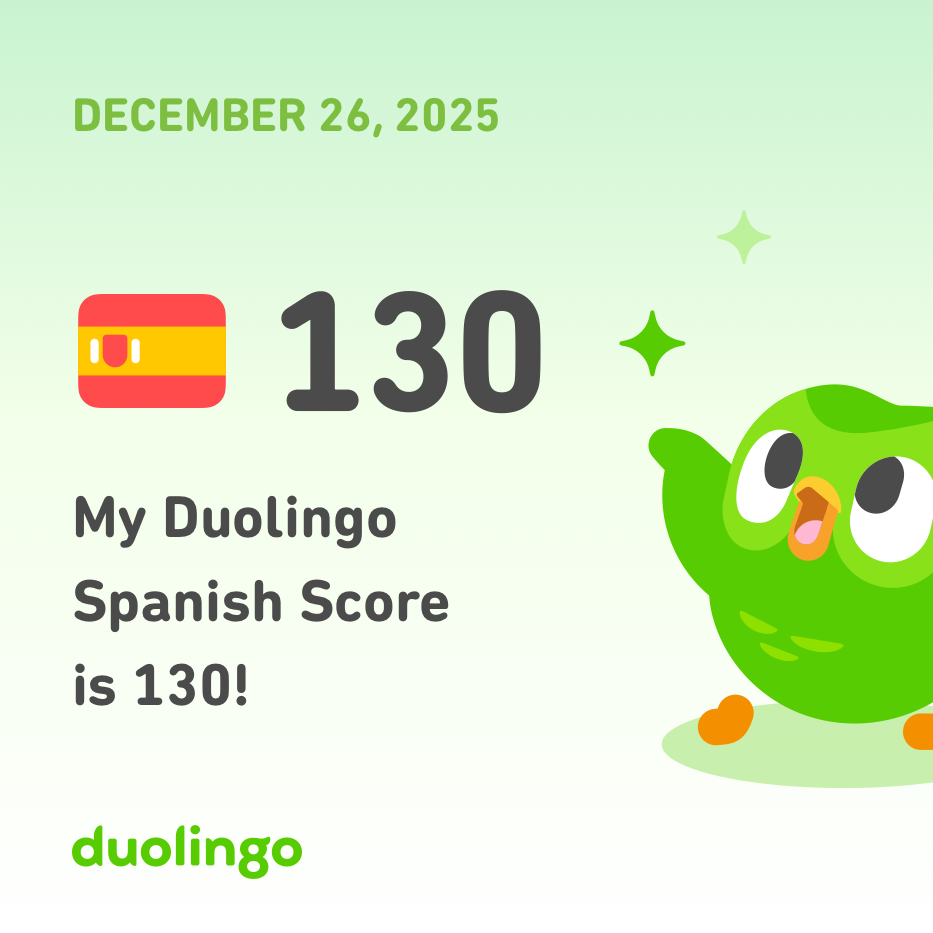
Reaching Level 130 in Duolingo Spanish In preparation for Mexico in January, 2026!
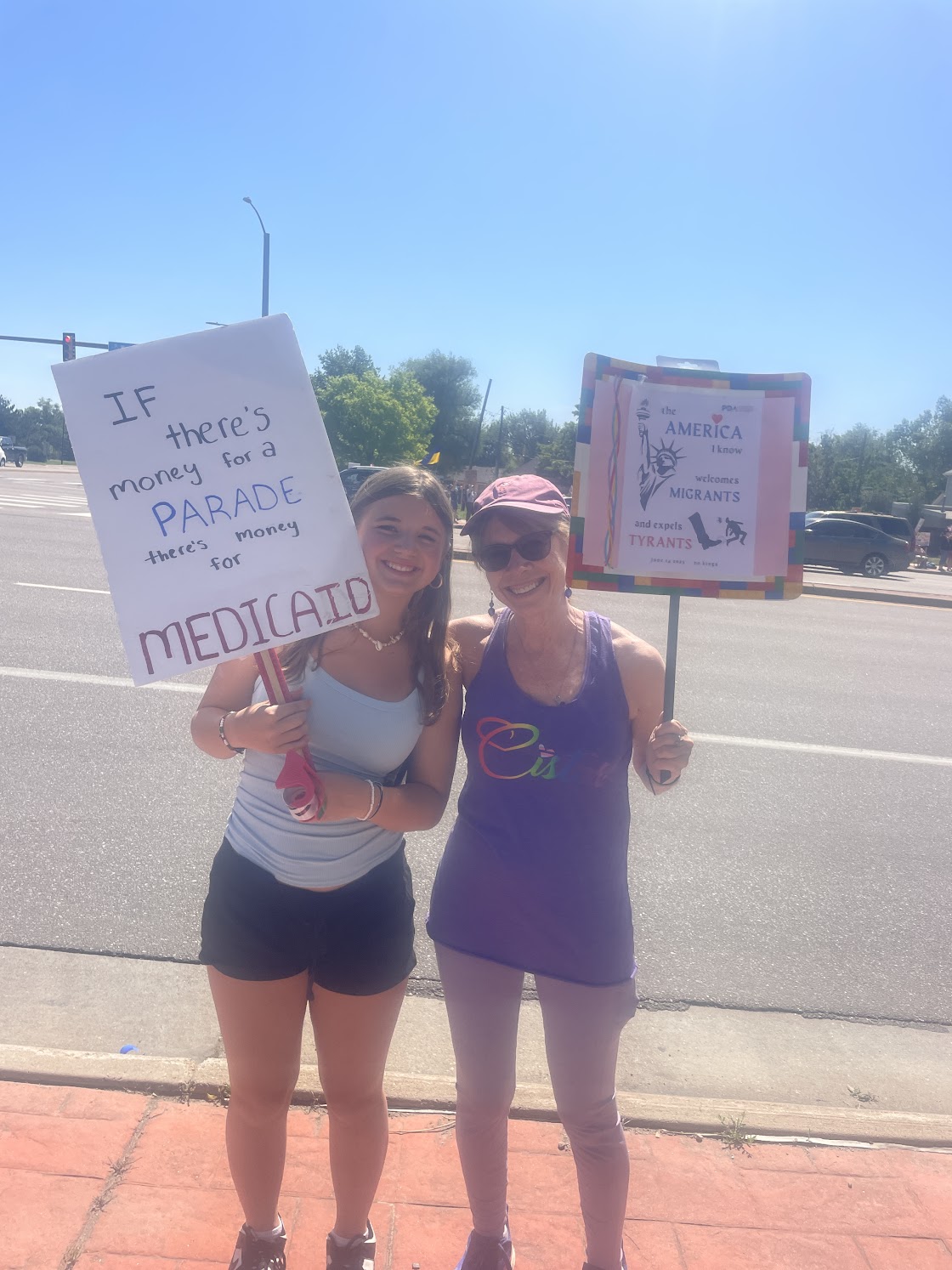
Participating in peaceful rallies celebrating free speech and democracy Being part of an historic movement with my granddaughter Reneya—finding joy in gratitude for our freedoms.
Grandchildren & Joy
Solving an escape room with Diego for his 16th birthday So fun!
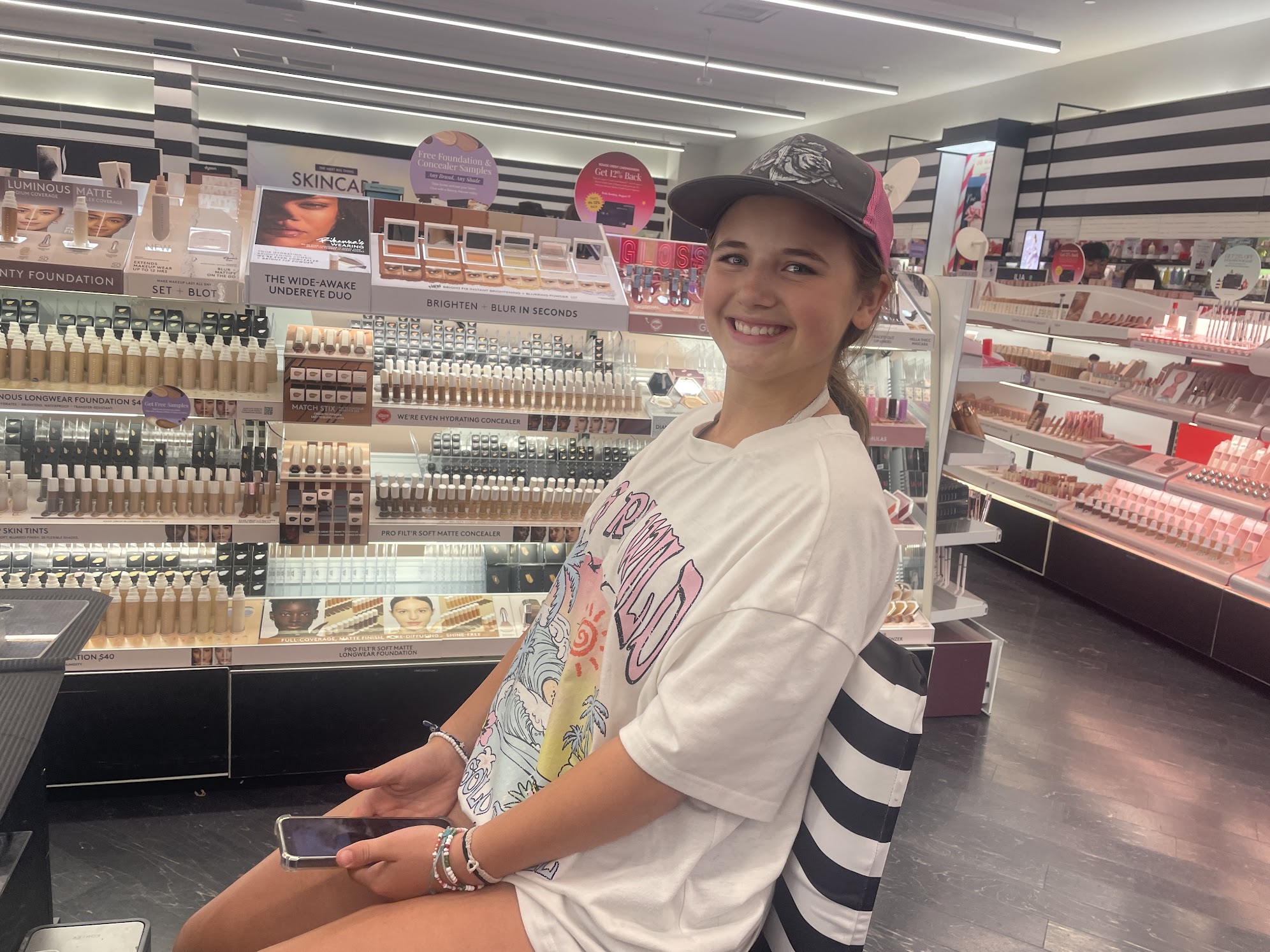
Attending a Descendants acting workshop and Sephora Makeover with Reneya for her 14th birthday Growing up too fast.
Looking back, these joyful aging adventures remind me that I have so much to be grateful for.
I was a lot less “prepared” with my usual list of goals. I was not nearly as disciplined with accomplishing major milestones… (other than Duolingo, that is.) Yet, still, every-day-life presented me with so much joy.
Here’s to staying open, finding joy, and seizing each day—one quotidian adventure at a time. (Quotidian: one of my favorite underused words, meaning “everyday.” I know I overuse it—because, after all, it is a quotidian word.)
Getting a pTau-217 blood test for Alzheimer’s Risk
In my last blog post I shared that I decided — as part of my “What to Do in Retirement” theme — to get a blood test that measures pTau-217, one of the earliest and most accurate biomarkers for Alzheimer’s disease. They now know that Alzheimer’s pathology can begin 15–20 years before symptoms, so early detection is becoming as important as cholesterol testing.
Last week, I got the results.
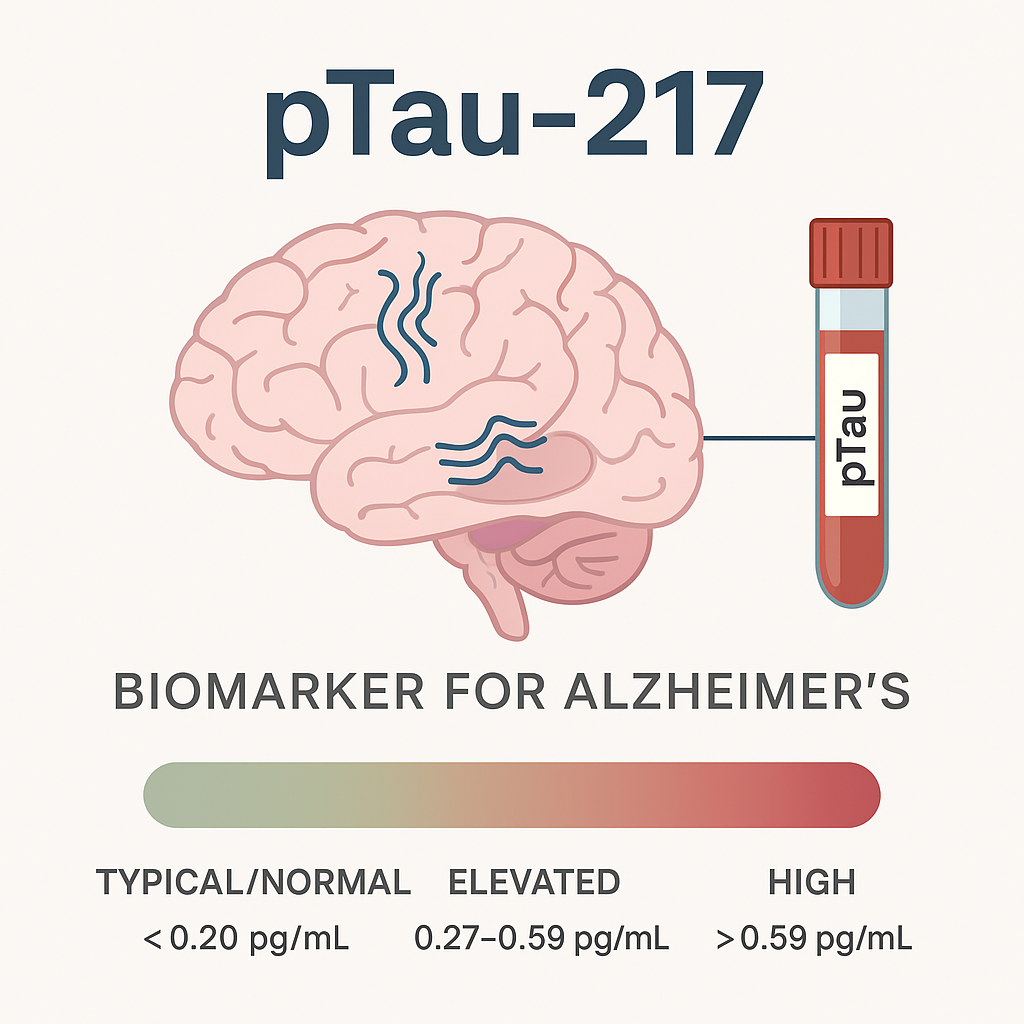
➡ My pTau-217 level is 0.13 pg/mL. ➡ Which means… absolutely nothing alarming. In fact, it’s great news!
Research labs all over the world (BioFINDER, Mayo Clinic, Alzheimer’s Research & Therapy, JAMA Neurology studies) use cutoffs ranging from 0.27 to 0.59 pg/mL to indicate early Alzheimer’s activity.
My number? 0.13. “Low Risk” – This was a huge relief, but since these tests are new, I still wasn’t sure what exactly it meant. Did it mean I was in the clear for life?
So, thanks to Google and ChatGPT, I did more research and found out:
I’m not in the 20-year preclinical Alzheimer’s window.
I don’t have measurable amyloid or tau buildup.
My risk for developing symptoms in the next 10–15 years is considerably lower than average, even with family history.
How often should we test for pTau-217?
Experts say pTau-217 levels rise extremely slowly, so every 2–3 years is a reasonable interval — unless I join a clinical study.
Now that the results are in, it’s easy for me to say I’m glad I got tested. I’d been obsessively worried and now I can breathe easier. However, those who are high-risk are eligible to participate in trials. The best time to be able to influence the outcome is before symptoms begin to show during the “20-year preclinical Alzheimer’s window.”
If you’re curious about your own risk, I did my free screening through CareAccess, and they even gave me a $45 gift card. Here’s my referral link: http://friends.careaccess.com/783Mjz
Whether or not you get tested or are low-risk or high-risk, I think we could all benefit from having a brain-healthy lifestyle. This year, my blogging theme was “retirement.” Next year, it’s going to be about Healthy Aging, with an emphasis on Brain Health!
I’m excited to share all that I’m learning about Alzheimer’s and the brain.
I try to have a yearly theme for my blog and this year it was going to be fun things to do in retirement. I’ve covered both the usual (Solo Travel!) and the unusual (Light Therapy). Now there’s something new I can do! Something I wasn’t able to do before this year: Find out my Alzheimer’s risk in retirement. (Yay!)
I didn’t exactly have “get a pTau blood test” on my bucket list, but here we are.
Asking My Doctor
I’ve been somewhat obsessive about brain health since my Mom’s been diagnosed with Alzheimer’s. When I read about the new blood tests that are out I’d been internally debating about whether or not I should find out my risk.
“I should at least find out if they’re available and covered by insurance,” I thought.
So at my annual exam, I bravely asked my doctor.
Her response was against it and included comments such as…
“It’s too new.”
“It’s not covered by insurance.” and
“I have a patient who really has problems and it’s not even covered for her.”
I was mildly relieved that I apparently was not as impaired as at least one of her other patients.
According to her, the test wasn’t recommended unless I was already showing signs of Alzheimer’s—like forgetfulness, confusion, or putting my keys in the refrigerator. I was also relieved she didn’t mention constantly getting lost which has been a problem of mine my entire life.
Meanwhile, I take the AARP cognitive test every three months and swear I’m improving. (Now that I’ve memorized the test.)
I can wait for the blood tests to be covered, I thought.
The $1,000 Blood Test That Wasn’t Meant to Be
In my continued quest to stay up-to-date, I kept hearing about these blood tests and how the earlier high-risk Alzheimer’s can be detected, the more chance there is that it can be prevented or delayed with lifestyle changes.
I called a neurologist who offered the test. They quoted me over $1,000, not covered by insurance.
I decided I should just make all the lifestyle changes as if I were high risk. No more alcohol, no more sugar, only whole foods, and daily exercise.
Enter CareAccess: The Unexpected Hero
Then—thank you, targeted advertising gods—I saw an ad for CareAccess, offering the test for free for people over 55 with a family history of Alzheimer’s.
Woo Hoo! Maybe I could go back to eating somewhat poorly and drinking margaritas again!
And to sweeten the deal, they gave me a $45 preloaded Mastercard just for participating.
Last Monday, I got the blood test—full lipid panel and the Alzheimer’s pTau marker. I’ll get the results next week. (Until then, I’m savoring unhealthy foods and drinks.)
Am I Nervous? Yup. But Also…Realistic.
Here’s my thinking:
Even if the results say I’m “high risk,” it’s not that different than getting news that I’m going to die someday.
My mom didn’t show symptoms until her late 80s, and research has advanced dramatically since then.
Today we have:
medications
brain-healthy lifestyle recommendations
actual hope!
And I already LOVE doing a lot of the brain-healthy stuff like socializing, learning, and sleeping! (And I can learn to love healthier eating and more exercise.)
Why I Still Want to Know
Many people don’t want to know their Alzheimer’s risk. Totally understandable.
But for me, knowing earlier gives me more time to plan, adjust, and to have the motivation to stick to the healthiest lifestyle I’ve ever had.
Full disclosure: I get $25 if you get the test yourself. If you know me, hit me up and we’ll spend it together on a brain-healthy meal! (Or maybe a celebratory drink before we start on our brain-healthy regimen.)
Carpe Diem, Brain Edition
Retirement gives us the gift of time—and knowing our Alzheimer’s risk in retirement can help us make the most of it. Whether you want to learn more, stay blissfully unaware, or just enjoy the $45 gift card like I did, the important thing is this:
One of the joys of living a Carpe Diem lifestyle is saying “yes” to new things—even better when it’s something I’ve never heard of before and good for my brain! My friend Cathy recently told me about The Light Club in Boulder, a place that is unique, immersive, and beneficial for brain health. Count me IN!
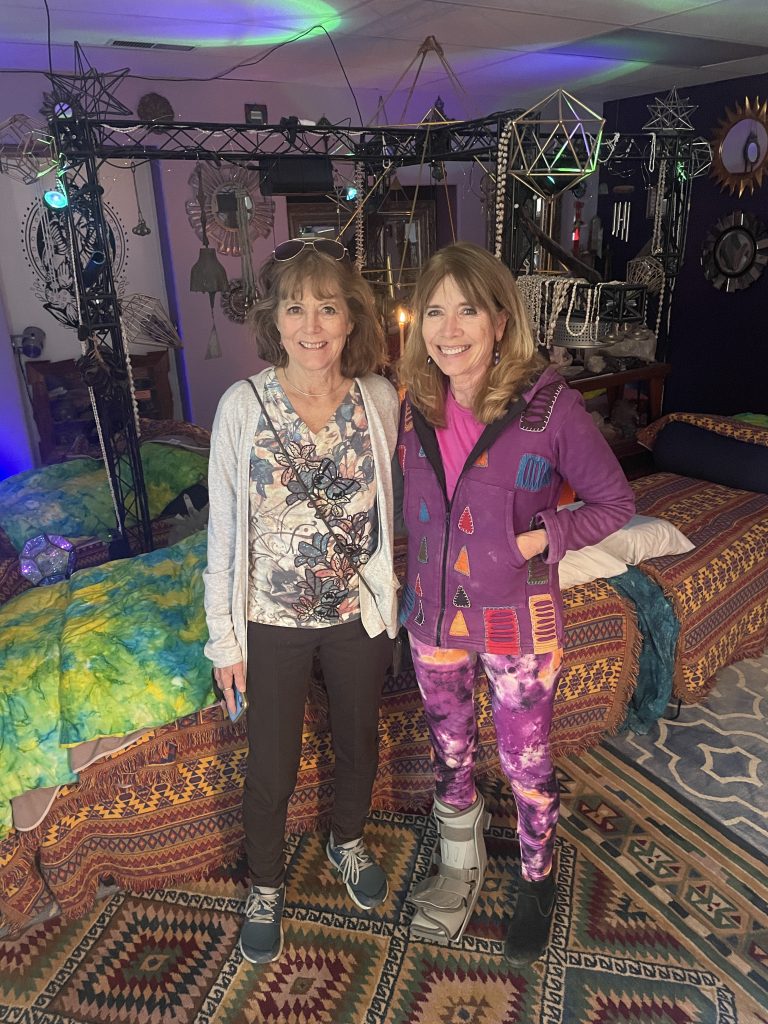
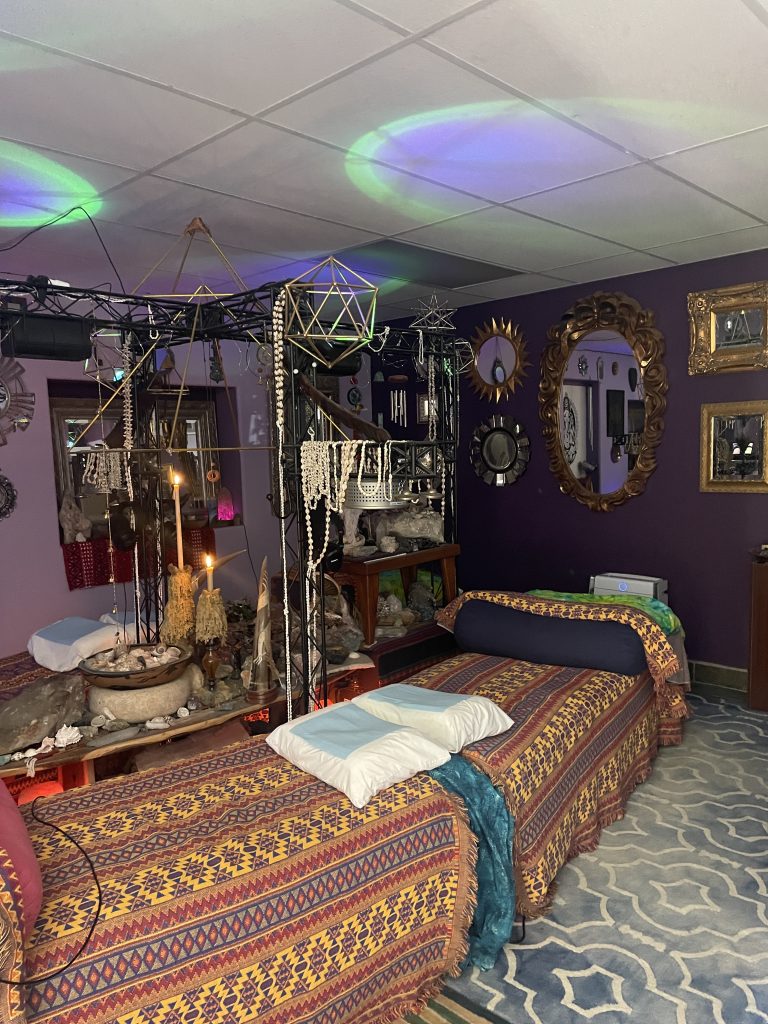
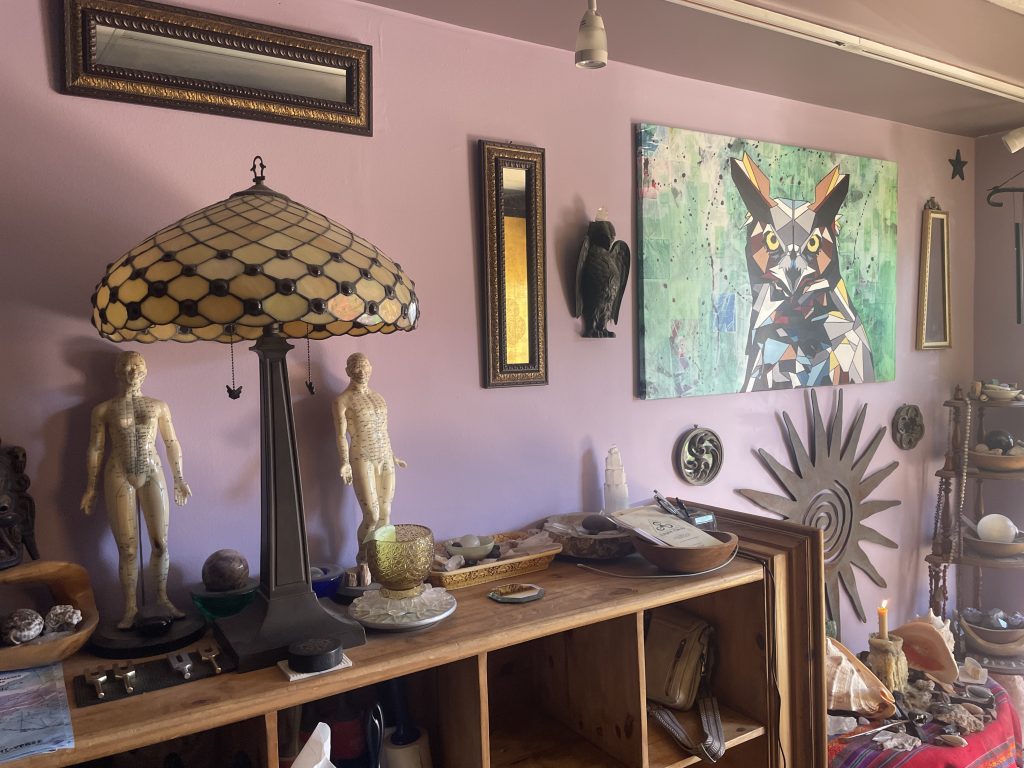
Walking inside felt like stepping into a dreamlike sanctuary. With patterned textiles, crystal formations, geometric sculptures, mirrored accents, and soft, shifting lights, the entire space buzzed with color and creativity. The walls were painted my favorite color – you guessed it – purple! It was part art installation, part meditation space, and entirely unlike anything I’d experienced.
By the way, I love trying to match my attire to whatever celebration or experience I’m having, and look how perfectly my purple attire fit in!
The Light Club Experience
Cathy and I lay down on two mildly vibrating beds (head-to-head) draped with vibrant fabrics. Above us hung intricate geometric structures, strands of beads, and special lights. Before the session began, we put on high-quality headphones, and even the simple introduction sounded like it came from some other dimension. The audio felt close, rich, and fully immersive—like a hologram for the ears.
When the session started, we closed our eyes. Even with no external visuals, I began seeing colors, patterns, and shapes dancing behind my eyelids. These weren’t projected by the room—they were created by my own brain, responding to sound, light, and relaxation. It was mesmerizing in a way that felt both soothing and mentally stimulating.
A Tiny Moment of Confusion (Thanks to a Fly!)
At one point, I felt a faint buzzing sensation on my upper lip. Because my eyes were closed and the headphones blocked all real-world noise, I honestly wondered if this was some kind of unexpected sensory component of The Light Club experience—though definitely not one I would have signed up for!
After a moment of uncertainty, I swatted at it and felt it flutter away. Sure enough, after the session ended, I confirmed: it was a real fly, not some experimental sensory technology. A funny reminder that even in an otherworldly environment, nature still participates.
A Microadventure for Brain Health
The Light Club felt like a natural extension of my “Year of Microadventures”—those unique, curious, low-effort adventures that add novelty and joy to everyday life.
What I loved most was the blend of relaxation, sensory stimulation, and simple fun. It wasn’t just visually and aurally immersive—it was a moment to step out of routine and let my brain explore something new.
To be honest, it reminded me a bit of the Psilocybin journey I took a couple of years ago, but without the psilocybin!
Also, I’d like to note, that there is a whole lot more to the science behind light and sound waves and how they can help our brains. Being a newbie, I just got an initial appetizer into a world full of recipes.
Would I Recommend The Light Club?
Absolutely. If you’re in Boulder and curious about mindfulness, creativity, or brain-healthy experiences, The Light Club is worth a try. It was kind of a woo-woo experience for this engineer, but just trying new things builds neuroplasticity, so, if you get the chance, do it!
it’s a soothing, colorful, and memorable microadventure—especially when shared with a good friend.
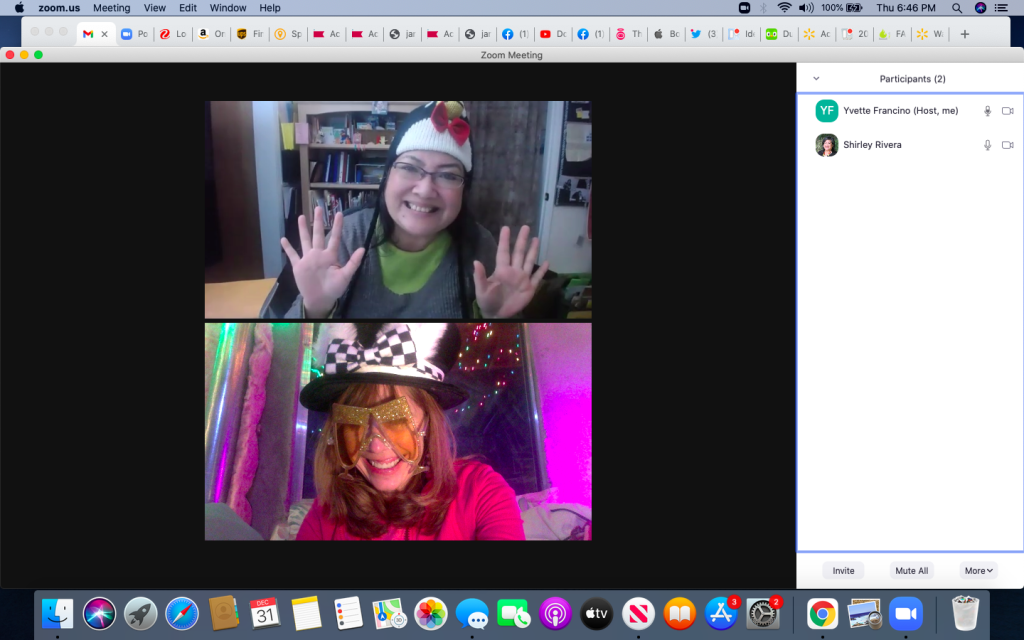
Virtual NYE Celebration with Shirley, Dec.31, 2020
Yesterday, I got a text from my friend, Shirley. Though our friendship began online, she quickly “graduated” from a virtual friend to a real friend—long before we ever met in person.
In her text, Shirley told me that she was grieving for a friend who had died. She introduced me to a term I wasn’t aware of, “Cybergrief” and included a hyperlink to an article about the topic.
Cybergrief
A quick Google search led me to this definition::
Cybergrief is the natural emotional response to a cyberloss, which is the death of someone who was known primarily through an online connection. It’s a legitimate form of grief, distinct from offline losses, though it shares many core human aspects of mourning. Unique challenges include a lack of social empathy for these online losses and the complexity of navigating public mourning on social media, according to The New York Times.
Grief of any sort is tough to navigate, but as the article and the definition describes, cybergrief also has the complication of societal norms and judgments.
As is the case when I hear about any kind of “societal norms or judgments,” I can feel my own judgment meter going up against the judgers! No one should be judged for who they grieve, how they grieve, or how long they grieve! Isn’t it bad enough to be grieving at all without having the additional complication of feeling judged for it?
I guess another trigger for me is the implication that “virtual friends” are not “real friends.” I’ll admit, declaring romantic love for someone you’ve only met online might be premature (and I know a few relationships that didn’t survive that test). That being said, I know people can have deep and meaningful friendships with people who they haven’t met in real life.
When is a friendship “real”?
Many people think a relationship isn’t “real” until two people meet in person. I disagree. To me, a relationship is real when two real people are communicating honestly. Sometimes, that kind of connection can even be deeper than what happens face-to-face.
Shirley and I first met virtually because we were both bloggers. We’d both subscribed to a group that included prompts for bloggers. This was December, 2010, the month that my friend, Craig Dunham, died from ALS. My blog posts centered around my grief and the amazing influence Craig had on my life.
Looking back, I realize that our friendship itself was born out of grief — and healing through Shirley’s deep and genuine empathy.
In this post, I respond to the prompt: What was one of your most joyful ordinary moments this year?
I write about my new virtual friend, Shirley, and include this paragraph:
Shirley acknowledged and honored the grief I’ve been feeling about my friend, Craig. She read many of the posts I’d written about him and told me that she was moved to tears. It’s hard to describe how warm and wonderful it feels to have someone — a stranger — tell you that. It makes me feel like I kept a little part of Craig alive. Grief is a very hard emotion… we feel so sad… but if we can somehow just take that love that we lost and keep it alive by sharing it with someone else… and they “get it”… they truly get how wonderful and special that person was, even without knowing him or her personally… we feel like that love is still amongst us.
Shirley and I ended up meeting virtually weekly with two other blogger friends. We also met 1:1 virtually via Zoom several times and in person a few times even though I live in Colorado and she lives in San Francisco.
In Real Life Reunion with Shirley, January, 2025
Shirley is the type of friend who is supportive, responsive, caring and understanding. Sure, meeting physically adds to the friendship, but the friendship was there because she was genuine from her first lovely message.
Grief for people we’ve never met
This week many people are grieving for Jane Goodall. I’m not sure if this fits into the same category as “cybergrief” but I know I feel a sense of grief when someone I admire dies, even if I never met them. It just feels so sad that they are no longer here, on this earth, bringing joy to others (and the animal kingdom!).
Jane Goodall reminds me of another great friend, Becky Burns. In this old post, I write about Becky’s great communication skills with people and with animals. Once a boy asked her if she was Jane Goodall!
I know Becky was especially hit hard with the death of Jane Goodall, someone she’s always deeply admired.
Becky with her dog, Carla
Virtual friendships and grief in retirement
In these retirement years, they say friendships are more difficult to make. Partly, that’s because many of our friends originated from our work life. It also may be because we are more limited in the social functions we can attend.
Certainly, I’ve found the ability to connect with people virtually to be a wonderful perk of living in this day and age! (But, then again, I’ve always been a bit of an introverted geek.)
In the end, both friendship and grief are personal. They’re about love and admiration, not about how often we’ve met in person. Our friendships and grief should never be judged as “not real” by society. Only we can judge the depth of our feelings about our emotions or our relationships.
Grief is so difficult, but something, I’m afraid, that is one of the downsides of aging. Our “real” friends (whether in person or virtual) are there for us, help us through the pain, and bring us the joy of being seen and understood.
Whether our friends live down the street or on the other side of a screen, what matters most is that we show up for one another — with empathy, honesty, and love.
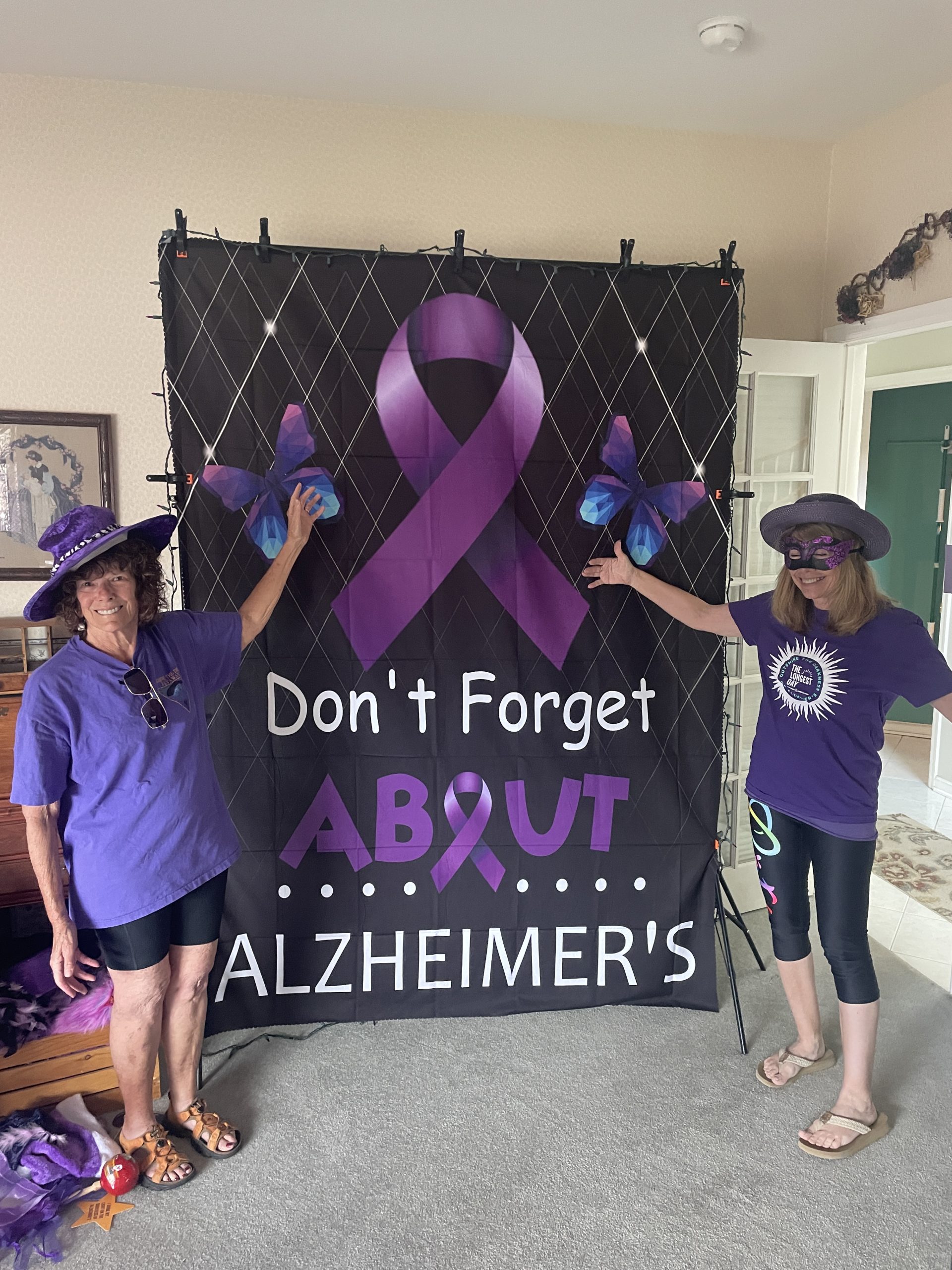
One of the things I love most about Carpe Diem Day is finding joy in celebrating the many “little-known holidays” that brighten our calendars. Today is one that feels especially meaningful: National Alzheimer’s Day. It’s a chance to raise awareness, celebrate the progress being made in research, and take steps — big and small — to keep our brains healthy.
This year, it’s personal. My mom recently moved into a memory care facility close to my sister, Michele. While the transition has been difficult, there’s comfort in knowing she’s safe, cared for, and close to family. Thanks to a simple but powerful tool — the Echo Show — I’m able to “drop in” with video calls when I can’t be there in person. Technology, in this case, really does help us seize the day and stay connected.
Celebrating research progress
Scientists are uncovering new insights about Alzheimer’s every year, and there are promising treatments on the horizon. These advances remind me that hope and progress are alive and well.
Making a difference today
On this National Alzheimer’s Day, there’s a special way to amplify your impact. The BrightFocus Foundation is tripling all donations made today — turning every $1 into $3 for Alzheimer’s research and support. If you’d like to join in, here’s the link: BrightFocus Triple Match.
Everyday brain health
We can also celebrate by caring for our own brains:
Moving our bodies — walking, dancing, stretching.
Eating nutritious, colorful foods.
Staying socially connected.
Challenging ourselves with new activities, like learning a skill or playing a game.
Carpe diem isn’t about ignoring challenges; it’s about finding ways to live fully in the midst of them. On this National Alzheimer’s Day, that means honoring loved ones like my mom, supporting the research that brings us hope, and practicing simple daily habits that keep our own brains bright and strong.
💜 Here’s to living fully, loving deeply, and celebrating every moment — one special day at a time.
Read more about my Mom’s journey with AD in these posts:
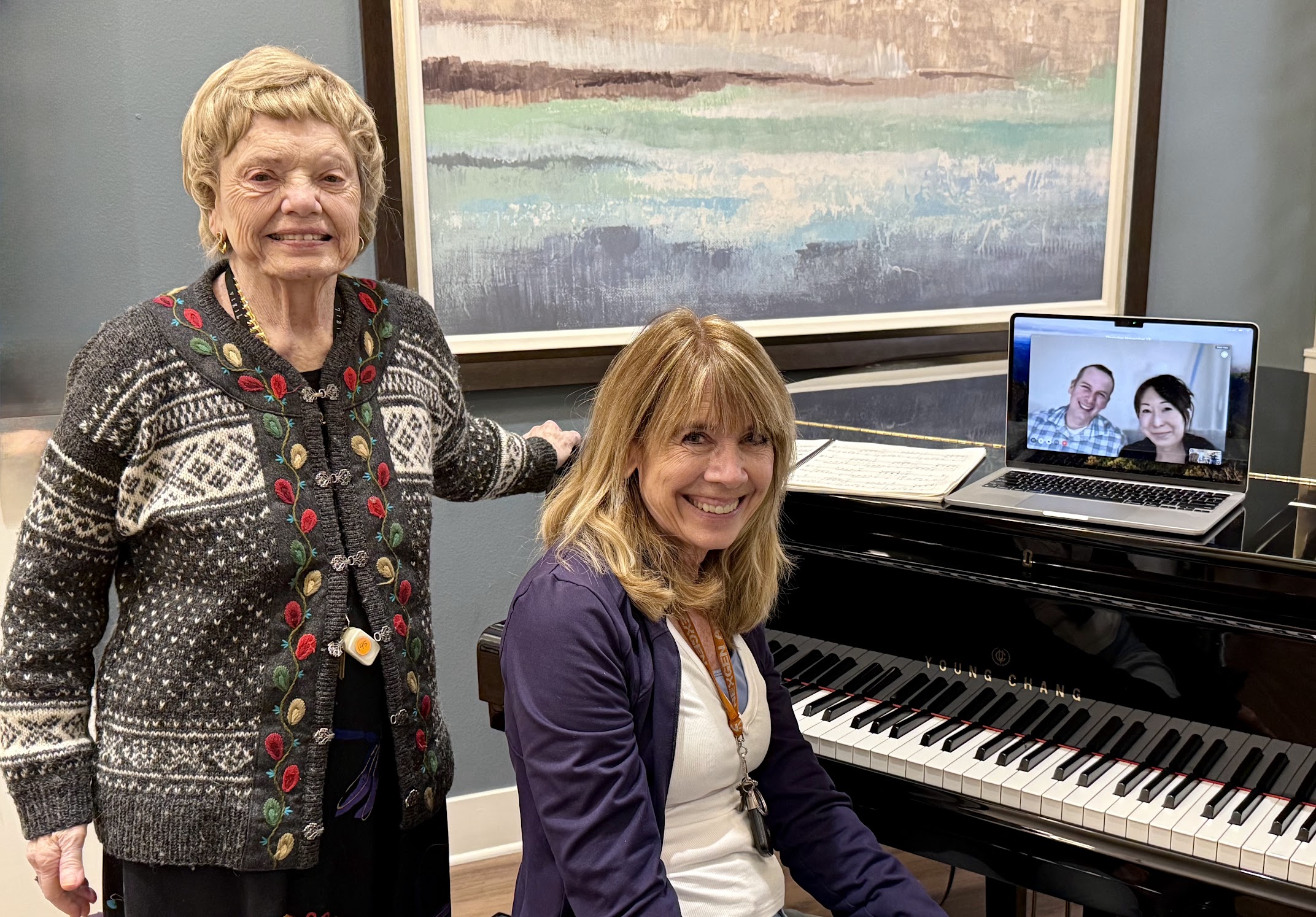
Last month, Mom landed in the hospital with sepsis. (Don’t worry—she’s doing much better now!) While she was still in her hospital bed, a volunteer wheeled in a keyboard and started playing Que Sera, Sera. And there was Mom—singing right along, like she hadn’t missed a beat.
Seeing that video reminded me how powerful music can be, especially for people with dementia. I went hunting through my old piano books and pulled out The Sound of Music. (Yes, I still had it from childhood!) I started practicing, and during our nightly calls, I’d play for Mom. She’d hum or sing along, and no matter how many notes I missed, she always ended with, “Oh, I just LOVED that!” Yes, she’ll always be my biggest fan!
It’s become our sweet little bedtime ritual—me practicing, her singing, neither of us caring that it’s the same routine every night. (Though our nightly concert might be wearing thin for my house-mates, John and Mari!)
When I visited Mom in person last week, we even recorded her singing The Sound of Music. And right at the end, as she sang, “My heart will be blessed with the sound of music, and I’ll sing once more,” I teared up and totally screwed up my notes at the exact most emotional moment. Typical me!
Now, I don’t want to make it sound like music is the only way to reach Mom. She’s always brighter when she sees me, either via FaceTime and especially, in person. But music definitely adds an extra sparkle. It makes her happy. It makes me happy. And it brings back a flood of memories for both of us.
I Simply Remember My Favorite Things
Music has been a part of our family’s history throughout my life. Mom played the piano and my sister and I both learned to play, too. Broadway musical hits were popular in our family, but “The Sound of Music” was undoubtedly the musical that generates so many memories:
One of the first movies I saw at the theater!
Mom singing My Favorite Things to me when I was little and crying.
Hearing the songs over and over again from our stereo or being played on the piano.
Our family watching the movie annually together once it was out on TV.
For Mom’s 70th birthday, I rewrote the lyrics to So Long, Farewell, and her six grandkids performed it in a skit that had everyone cracking up.
Music isn’t a cure, but can be a sweet relief from the fears that come with Alzheimer’s. I created this video to the tune of “Raindrops on Roses” hoping it will help Mom simply remember her favorite things.
I haven’t been on my computer nearly as much as I’d like lately. My eyes have been bothering me—a lot. More than an hour on the computer leaves me with headaches and blurry vision.
That said, I still make time to scan my morning newsletters, and last week one led me to a book that instantly spoke to me: Joyspan by Dr. Kerry Burnight. It was featured in an article titled Anti-Aging Is Overrated. Joy Is the Real Fountain of Youth.
The article also linked to this podcast episode, which I immediately listened to. And wow—Joyspan! Kerry described the exact ideas I’ve been living and reflecting on since I retired.
The 4 Keys to Improving Joyspan
Since retiring (and devouring every happiness self-help book I can get my hands on), I’ve often said that the four things I try to do every day are:
Learn
Socialize
Give
Exercise
Kerry shares four keys to joy that look awfully familiar:
Grow
Connect
Give
Adapt
Pretty similar, right? The first three line up almost exactly. The difference is that Kerry lists Adapt instead of Exercise. But honestly, I think exercise is one of the best ways to adapt! Movement helps us adjust to aging bodies and shifting circumstances.
And if there’s one thing I’ve gotten good at—both in retirement and in my work as an Agile coach—it’s adapting. Adapting means embracing change, letting go of rigidity, and finding new ways to do the things we love.
Finding Joy in the Midst of Challenge
Listening to Kerry on different podcasts this week, I especially connected with her stories of resilience. She emphasizes how mindset shapes our aging journey—accepting limitations without giving up joy.
One story really struck me: Kerry described how a friend with Alzheimer’s was still able to offer her meaningful advice. It’s such a reminder that no matter our age or abilities, we all have something valuable to give.
That resonates deeply with my own experience. I’ve written often about my mom and her journey with dementia. People sometimes tell me how thoughtful I am to call her every night. But honestly, I benefit just as much—maybe even more—from those visits. Through our calls, we share laughter, comfort, and love. And together, we’re living all four Joyspan keys: growing, connecting, giving, and adapting.
Combining Agile Practices with Joyspan
For years, I’ve thought about writing another book on applying Agile principles to retirement. But with my eye issues, projects that involve heavy reading and writing have taken a back seat.
Reading Joyspan has given me the nudge I needed to get going again. Yes, my eyes are a challenge—but there are tools and workarounds: audiobooks, Kindle accessibility settings, dictation software, and yes, even ChatGPT for copyediting. I can make adjustments to keep doing what I love, while also staying hopeful that my doctors will help me find long-term solutions.
And when I compare my situation to what so many others are facing, I realize how fortunate I am. Kerry herself has dealt with major eye issues. My dear friend Craig, who passed from ALS in 2010, and my mother, who is navigating Alzheimer’s, have both taught me by example that joy is possible even in the face of profound challenges.
When I was younger, I remember thinking that ALS and Alzheimer’s were the worst diseases imaginable and prayed no one I loved would ever have to endure them. Life had other plans. And yet, walking alongside Craig and my mom has been an unexpected gift—teaching me about grace, resilience, and the unshakable possibility of joy.